Quotessence
Home / Quotes / Quote by Elizabeth Strout

Quote by Elizabeth Strout

Work

Olive Kitteridge

This book delves into the intricacies of Olive Kitteridge's relationships and experiences, offering a poignant and insightful look at the human condition through the lens of a single character. more
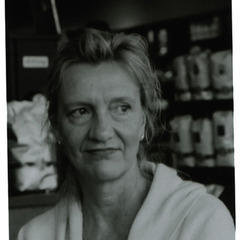
Author

Elizabeth Strout
Elizabeth Strout

Elizabeth Strout (born January 6, 1956) is an acclaimed American author known for her nuanced portrayals of small-town life and human complexity. Born in Portland, Maine, she grew up in a literary family. Strout won the Pulitzer Prize for Fiction in 2009 for her novel 'Olive Kitteridge,' which was adapted into an award-winning HBO miniseries. Her other notable works include 'Amy and Isabelle,' 'The Burgess Boys,' and 'Anything Is Possible.' Strout's writing often explores themes of loneliness, family, love, and loss through the lives of ordinary people. She is praised for her concise yet powerful prose and deep psychological insight. Her works have been translated into multiple languages and have a global readership. more

You May Also Like

“The Lord must have created coffee to reward humans for those bad times they sometimes have on Earth. Having charged your heart and brain with a cup of coffee, you’re ready to face the challenges of life. A good cup of coffee makes life seem better.”

“When I was extremely young and shockingly stupid, I thought you weren't supposed to ever get angry at anybody you cared about (lest you suspect I'm exaggerating the "shockingly stupid" part, I also thought Mount Rushmore was a natural phenomenon). I honestly believed that people who were truly in love would never dream of having a good, old-fashioned, knock-down, drag-out fight. I guess when you're the type of girl who walks around thinking that the wind just sort of sculpted Teddy Roosevelt into the side of a mountain, the concept of a fairy-tale relationship makes total sense.”

“For men, the softer emotions are always intertwined with power and pride. That was why Karna waited for me to plead with him though he could have stopped my suffering with a single world. That was why he turned on me when I refused to ask for his pity. That was why he incited Dussasan to an action that was against the code of honor by which he lived his life. He knew he would regret it—in his fierce smile there had already been a glint of pain. But was a woman's heart any purer, in the end? That was the final truth I learned. All this time I'd thought myself better than my father, better than all those men who inflicted harm on a thousand innocents in order to punish the one man who had wronged them. I'd thought myself above the cravings that drove him. But I, too, was tainted with them, vengeance encoded into my blood. When the moment came I couldn't resist it, no more than a dog can resist chewing a bone that, splintering, makes his mouth bleed. Already I was storing these lessons inside me. I would use them over the long years of exile to gain what I wanted, no matter what its price. But Krishna, the slippery one, the one who had offered me a different solace, Krishna with his disappointed eyes—what was the lesson he'd tried to teach?”

“The happiness of man is: I will. The happiness of woman is: he wills. ‘Behold, just now the world became perfect!’—thus thinks every woman when she obeys out of entire love. And women must obey and find a depth for her surface. Surface is the disposition of woman: a mobile, stormy film over shallow water. Man’s disposition, however, is deep; his river roars in subterranean caves: woman feels his strength but does not comprehend it.”