“As a boy, Ogion like all boys had thought it would be a very pleasant game to take by art-magic whatever shape one liked, man or beast, tree or cloud, and so to play at a thousand beings. But as a wizard he had learned the price of the game, which is the peril of losing one's self, playing away the truth. The longer a man stays in a form not his own, the greater this peril. Every prentice-sorcerer learns the tale of the wizard Bordger of Way, who delighted in taking bear's shape, and did so more and more often until the bear grew in him and the man died away, and he became a bear, and killed his own little son in the forests, and was hunted down and slain. And no one knows how many of the dolphins that leap in the waters of the Inmost Sea were men once, wise men, who forgot their wisdom and their name in the joy of the restless sea.”
Quote by Ursula K. Le Guin
Work
Le Guin's novel is renowned for its intricate world-building and philosophical themes, following Ged as he learns the responsibilities and consequences of his magical powers. more
Author
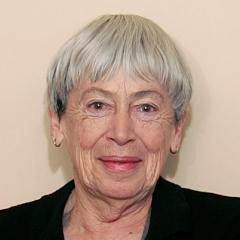
Ursula K. Le Guin, born on October 21, 1929, is an esteemed American author of science fiction and fantasy. Known for her profound philosophical insights, rich imagination, and unique narrative style, Le Guin's works have won numerous literary awards and have had a significant impact on science fiction and fantasy literature. Her most famous works include the 'Earthsea' series and 'The Left Hand of Darkness', which have won her awards such as the Nebula and Hugo Awards, and she has also received the National Book Award for lifetime achievement for her contributions to literature. more
You May Also Like
“There's the parent you want and the parent you have.”
“When one has a grateful heart, life is so beautiful.”