Quotessence
Home / Quotes / Quote by Aberjhani

Quote by Aberjhani

Work

The American Poet Who Went Home Again

This book delves into the emotional and psychological transformation of a poet as he revisits his roots, intertwining his personal history with the evolution of his artistic identity. more

Author
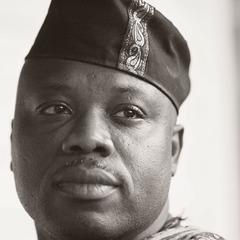
Aberjhani
Aberjhani

Aberjhani, born on July 8, 1957, is an accomplished columnist whose work spans a wide range of topics including culture, history, and literature. Renowned for his profound insights and unique writing style, Aberjhani's articles often provoke deep thought among readers. more

You May Also Like

“Along with the mystical wonderment and sense of ecological responsibility that comes with the recognition of connectedness, more disturbing images come to mind. When applied to economics, connectedness seems to take the form of chain stores, multinational corporations, and international trade treaties which wipe out local enterprise and indigenous culture. When I think of it in the realm of religion, I envision smug missionaries who have done such a good job of convincing native people everywhere that their World-Maker is the same as God, and by this shoddy sleight of hand have been steadily impoverishing the world of the great fecundity and complex localism of belief systems that capture truths outside the Western canon. And I wonder—if everything's connected, does that mean that everything can be manipulated and controlled centrally by those who know how to pull strings at strategic places?”

“There's nothing wrong with your color, being you," he said firmly. "Nothing wrong with what the good Lord gives us in His world, Cussy Mary." He didn't know, couldn't know, the load I'd carried as a Blue, the scorn and hatred and gruesome marriage. How dare Pa call me vain and now Jackson. How dare he too? "Nothing wrong—" Jackson repeated. I stepped back and shot out a shaky hand. "No, Jackson Lovett, you're wrong. There is nothing wrong with your color in your world, a world that wants only whiteness.”

“When white readers claim to be made uncomfortable—as many I heard from claimed—by the presence of something like untranslated words in fiction, what they’re really saying is: I have always been the expected reader. A reader like this is used to the practice of reading being one that may performatively challenge them, much the way a safari guides a tourist through the “wilderness”—but ultimately always prioritizes their comfort and understanding.”

“As the great botanist Bichat long ago said, if everyone were cast in the same mould, there would be no such thing as beauty. If all our women were to become as beautiful as the Venus de’ Medici, we should for a time be charmed; but we should soon wish for variety; and as soon as we had obtained variety, we should wish to see certain characteristics in our women a little exaggerated beyond the then existing common standard.”