“The family were wild," she said suddenly. "They tried to marry me off. And then when I'd begun to feel that after all life was scarcely worth living I found something"—her eyes went skyward exultantly—"I found something!" Carlyle waited and her words came with a rush. “Courage—just that; courage as a rule of life, and something to cling to always. I began to build up this enormous faith in myself. I began to see that in all my idols in the past some manifestation of courage had unconsciously been the thing that attracted me. I began separating courage from the other things of life. All sorts of courage—the beaten, bloody prize-fighter coming up for more—I used to make men take me to prize-fights; the déclassé woman sailing through a nest of cats and looking at them as if they were mud under her feet; the liking what you like always; the utter disregard for other people's opinions—just to live as I liked always and to die in my own way—Did you bring up the cigarettes?" He handed one over and held a match for her silently. "Still," Ardita continued, "the men kept gathering—old men and young men, my mental and physical inferiors, most of them, but all intensely desiring to have me—to own this rather magnificent proud tradition I'd built up round me. Do you see?" "Sort of. You never were beaten and you never apologized." "Never!" She sprang to the edge, poised or a moment like a crucified figure against the sky; then describing a dark parabola plunked without a slash between two silver ripples twenty feet below. Her voice floated up to him again. "And courage to me meant ploughing through that dull gray mist that comes down on life—not only over-riding people and circumstances but over-riding the bleakness of living. A sort of insistence on the value of life and the worth of transient things." She was climbing up now, and at her last words her head, with the damp yellow hair slicked symmetrically back, appeared on his level. "All very well," objected Carlyle. "You can call it courage, but your courage is really built, after all, on a pride of birth. You were bred to that defiant attitude. On my gray days even courage is one of the things that's gray and lifeless." She was sitting near the edge, hugging her knees and gazing abstractedly at the white moon; he was farther back, crammed like a grotesque god into a niche in the rock. "I don't want to sound like Pollyanna," she began, "but you haven't grasped me yet. My courage is faith—faith in the eternal resilience of me—that joy'll come back, and hope and spontaneity. And I feel that till it does I've got to keep my lips shut and my chin high, and my eyes wide—not necessarily any silly smiling. Oh, I've been through hell without a whine quite often—and the female hell is deadlier than the male." "But supposing," suggested Carlyle, "that before joy and hope and all that came back the curtain was drawn on you for good?" Ardita rose, and going to the wall climbed with some difficulty to the next ledge, another ten or fifteen feet above. "Why," she called back, "then I'd have won!”
Quote by F. Scott Fitzgerald
Book:The Offshore Pirate
Work
The Offshore Pirate
Browse quotes and source details for this work. more
Author
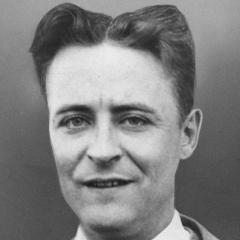
F. Scott Fitzgerald
F. Scott Fitzgerald was an American author of novels and short stories, renowned for his works that encapsulate the Jazz Age and the Roaring Twenties. His most celebrated novel, 'The Great Gatsby,' is a critical and commercial success, reflecting the themes of the American Dream and the decline of the American upper class. more
You May Also Like
Source: Dare You To
Source: Better Street Photos In 3 Powerful Steps
Source: Once Again Beautiful And Pure: A Tale of Strength and Redemption
Source: Emily Wilde's Compendium of Lost Tales
“Don’t accept the available as the preferable. Go extra mile with extra speed.”
Source: Shaping the dream
Source: No Ordinary Duchess
Source: Cibola Burn