Quotessence
Home / Quotes / Quote by William Dalrymple

Quote by William Dalrymple

“Whatever their DNA contribution to the region, the Brahmins did bring with them from India three crucial gifts that proved irresistible right across the region: Sanskrit, the art of writing and the stories of the great Indian epics. No Indian import had a deeper or more long-lasting impact than the deeds of the heroes of the Mahabharata and the Ramayana. From the fifth century, right on through to the dance and shadow puppetry of the present day, these would remain a major feature in the art and culture of South-east Asia.26 In time, even the landscape of South-east Asia began to be renamed under the influence of the great epics and the stories of their respective heroes, the Pandava brothers and Lord Rama. The earliest inscription in Khmer territories dating from the fifth century records that a ruler in what is now Laos took the Indic name Devanika and the grandiose Sanskrit title Maharajadhiraja, ‘King of Kings’. This happened during a ceremony when the King installed an image of Shiva under the lingam-shaped mountain that towered over his capital of Champasak. There he consecrated a tank which he named Kurukshetra, after the plain to the north of Delhi where the great battle of the Mahabharata was fought”

Quote by William Dalrymple

Work

The Golden Road: How Ancient India Transformed the World

Browse quotes and source details for this work. more

Author
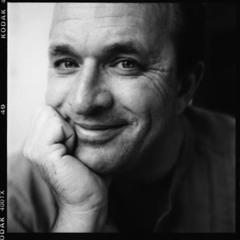
William Dalrymple
William Dalrymple

William Dalrymple, born on March 20, 1965, is a renowned historian specializing in the history and culture of the Indian subcontinent, particularly the Mughal Empire of the 17th and 18th centuries. His works are known for their in-depth historical research and engaging narrative style. more

You May Also Like

“Cambodian dust whipped up in the wind and stuck to my clothes like clay. I put a hand between my face and the sun and blinked Phnom Penn dust from my tired eyes. One idea, drink, beamed light in all directions across my dark consciousness. A slim lady walked toward me with a big smile and a bigger head. Her left hand rested on her waggling hips and her right hand rose above her head, limp-wristed, like she’d just thrown a winning ball toward a basket and was leaving her hand in the shot position. The lady walking toward me was a man. At least that much was clear, but the nature or our relationship was still a fog to me. She wore blue jeans and a white top accentuating her breasts, but her Adam’s apple and cow sized hands revealed more in daylight than she could hide at night.”

“Mother’s tenderness toward my younger sisters caused more tears to pool in my eyes. I felt too old to be hugged and caressed by her, yet my body yearned for her touch; at least this once. I couldn't recall the last time she had shared the same warmth with me. The countless months of hardship had created an ocean of distance between us. It would be too awkward to hug her now. I sat across from her with tear-stained cheeks, wondering if she could feel my sadness and if she knew I loved her unconditionally.”

“A story, I had learned, through my own constant knitting and reknitting of remembered words, can lead us back to ourselves, to our lost innocence, and in the shadow it casts over our present world, we begin to understand what we only intuited in our naivété - that while all else may vanish, love is our one eternity. It reflects itself in joy and grief, in my fathers sudden knowledge that he would not live to protect me, and in his determination to leave behind a part of himself - his spirit, his humanity - to illuminate my path, give light to my darkened world. He carved his silhouette in the memory of the sky for me to return to again and again.”

“He has,in short,reached his peak as a hunter,exuberantly altered from the pale,overweight statesman of ten months ago. Africa's way of reducing every problem of existence to dire alternatives-shoot or starve,kill or be killed,shelter or suffer,procreate or count for nothing-has clarified his thinking,purged him of politics and its constant search for compromise.”