Quotessence
Home / Quotes / Quote by Dejan Stojanovic

Quote by Dejan Stojanovic

“The One always remains the One. The division is appearance. The division and the life or existence of many is a phenomenon. One or Onenennes is Noumenon. Oneness is always present in plurality. Oneness is an underlying reality or Noumenon in action. For example, a universe like ours may have its birth and death, appearance and disappearance, while the universe as a totality, the sum of all, may still exist. In that case, Carlo Rovelli may be right in saying that “there is no such thing as a real void, one that is completely empty” (physicists have a consensus about this). Still, no universe, regardless of its size, can encompass nothingness or emptiness in its totality. All “space” beyond, not confined or affected in any way by any universe, is a real void. We cannot talk about a real void within the Universe, but beyond it, there is such a thing as a real void.”

Quote by Dejan Stojanovic

Work

ABSOLUTE

Browse quotes and source details for this work. more

Author

Dejan Stojanovic
Dejan Stojanovic

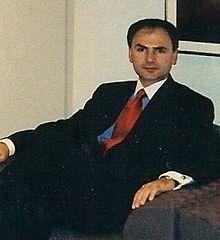
Dejan Stojanovic, born on March 11, 1959, is a Serbian poet known for his profound emotions and unique style in his poetry, which has won the hearts of readers worldwide. more

You May Also Like

“The other question is whether we agree about the terminology or if we need to adjust our language to the reality to be more precise. We would have to define different terms precisely in all their meanings and varieties. We cannot talk about the “real void” if we do not explain what a real void is. Only when we define the terms precisely can we use them freely, knowing that we will be as clear as possible and that others will understand us correctly; otherwise, there will always be room for misunderstanding.”

“Real Void is in the space yet unaffected by the made “space.” Although it is nothingness, the void provides volume to the Being to create space. Whatever we see and experience as space is a real void, regardless of how strange or absurd it sounds. As we experience it, the appearance of space envelopes void with its information and laws, offering information about the curvature of itself (the Being), not the void, yet the real void is always there and is “indestructible,” unchangeable, unaffected, and uncurved.”

“Some closed doors may appear to be setbacks, but they are actually steps forward. There are more possibilities ahead of you, even if it seems otherwise. Focus on the silver lining in every cloud and realize the blessing in disguise.”

“Absolute is always the same, yet always new. Its sameness is the source of its variety. Its sameness and oneness (singularity) make it omnipotent and rejuvenating. Its infinite age makes it infinitely young. It cannot be born or die, but it can live. The ultimate exit of the Absolute is life. Its meaning is life, not absoluteness. It already possesses absoluteness, but its absoluteness is its biggest enemy if it becomes satisfied with it because it transforms it into nothingness. It must fight against its absoluteness to gain the absolute value of life, which, although relative, provides meaning and purpose.”

“We can almost be sure of two poles of the Absolute—Being and Nonbeing. Being, as I understand it, can be equated with the Universal Mind (Ultimate Mind) or God, provided we use the term God following this philosophy and not following its general use (as in religions), where this term serves the ideas, desires, and dogmas of the people who claimed to speak a word of God (and not to fit reality).”

“We can be sure that the fifth element (idea) was immaterial for Plato and Aristotle, who used the term aether. The fifth element (Latin: quinta esentia) differs from the other four elements (Earth, Water, Fire, and Air). When we look at aether, from the perspective of our philosophy, as the main principle before the formation of the world, as a potential (in posse), during its actualization (in esse), and as the underlying Being or reality of all the existence, then this term can be equated with God or, conditionally, with the Universal Mind. A posse ad esse is the transformation from the potential of the Universal Mind to its actualization as the Universe.”

“Although the Being (Universal Mind) is not material, it does not mean that we cannot, conditionally, call this Mind an immaterial “substance.” This clarification is important to understand how an immaterial entity can transform into something we experience as material. Whatever we perceive and experience through our senses is based on conventions from secondary qualities of the world (as described by Locke, Berkeley, David Hume, and others). Perhaps our most admirable ability is primarily based on an “illusion.” Without this illusion, the world would not only be a sad place but a place without purpose. The whole truth and the beauty of the world lie hidden in this illusion. Our Reality is an illusion, and we shall reinvestigate the word illusion. Without illusion, there is no reality. If illusion is the source of our reality, we shall redefine illusion.”

“Why not accept this illusion in all its glory and as it is: real that cannot be more real regardless of all the “tricks” we think it pulled on us? Without all the devices and “instruments” the Universal Mind or the Being “pulled off” to “create reality,” we would not be able to experience all the beauty, glory, and miracles of existence. This illusion is the noblest thing reality can do for us. We must accept that we are real regardless of our awareness of what constitutes reality. Our knowledge does not make us less real. Our awareness shall not create more distance between us and the world. Quiet to the contrary, our awareness shall be a bridge for a fuller life and connection to the Ultimate source from which everything originates. This Source is not only the source of Everything but also the Source of peace and bliss. Even on an individual level, this realization leads to a better connection with oneself in light of the ultimate Oneness of Everything. Oneness is bliss in peace and peace in bliss.”