Quotessence
Home / Quotes / Quote by Edgar Allan Poe

Quote by Edgar Allan Poe

“Twas noontide of summer, And mid-time of night; And stars, in their orbits, Shone pale, thro' the light Of the brighter, cold moon, 'Mid planets her slaves, Herself in the Heavens, Her beam on the waves. I gazed awhile On her cold smile; Too cold–too cold for me- There pass'd, as a shroud, A fleecy cloud, And I turned away to thee, Proud Evening Star, In thy glory afar, And dearer thy beam shall be; For joy to my heart Is the proud part Thou bearest in Heaven at night, And more I admire Thy distant fire, Than that colder, lowly light.”

Quote by Edgar Allan Poe

Work

The Complete Poetry

This volume presents the complete collection of poetry by an individual poet, bringing together all known poems, verses, and lyrical works into one definitive edition. Such collections typically include the author's major poetry collections previously published separately, as well as any unpublished, lesser-known, or newly discovered poems compiled from various sources. The arrangement often follows chronological order or the poet's own preferred organization, sometimes including early works, transitional pieces, and later compositions. A complete poetry edition serves as a reference for scholars, students, and general readers seeking to engage with the full breadth of a poet's artistic output and poetic evolution over time. more
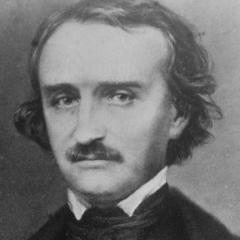
Author

Edgar Allan Poe
Edgar Allan Poe

American author, poet, editor, and literary critic. Known for his short stories and poetry, particularly his works of horror and mystery. His most famous works include 'The Black Cat', 'The Raven', and 'Annabel Lee'. more

You May Also Like

“Your uncompromising attitude makes people feel pathetic. Your very existence reminds them just how much they’ve sold out, and the more you’re acclaimed, the punier they themselves appear. When it’s like that, the only way they can fight back is by dragging you down. The bullshit gives them back a little bit of dignity – at least that’s what they imagine.”

“But hereto is replied that the poets give names to men they write of, which argueth a conceit of an actual truth, and so, not being true, proveth a falsehood. And doth the lawyer lie then, when, under the names of John of the Stile, and John of the Nokes, he putteth his case? But that is easily answered: their naming of men is but to make their picture the more lively, and not to build any history. Painting men, they cannot leave men nameless. We see we cannot play at chess but that we must give names to our chess-men; and yet, me thinks, he were a very partial champion of truth that would say we lied for giving a piece of wood the reverend title of a bishop.”