Quotessence
Home / Quotes / Quote by Margaret Atwood

Quote by Margaret Atwood

Work

The Blind Assassin

Set in the 1940s and 1950s, this book is a complex literary work that combines elements of mystery, romance, and magical realism. It follows the lives of two sisters, Iris and Laura, and delves into the secrets and complexities of their family history. more
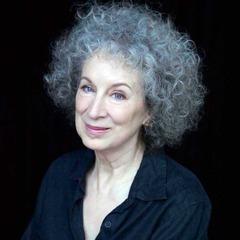
Author

Margaret Atwood
Margaret Atwood

Margaret Atwood is a renowned Canadian poet, novelist, playwright, and critic, born on November 18, 1939. Her works are known for their unique style and profound insights into social issues, with notable titles including 'The Handmaid's Tale' and 'Cat's Eye'. more

You May Also Like

“Sometimes I have the feeling that what takes place is identical to what doesn't take place, what we dismiss or allow to slip by us identical to what we accept and seize, what we experience identical to what we never try, and yet we spend our lives in a process of choosing and rejecting and selecting, in drawing a line to separate these identical things and make of our story a unique story that we can remember and that can be recounted, either now or at the end of time, and this be erased or swept away, the annulment of everything we are and do. We pour all our intelligence and our feelings and our enthusiasm into the task of discriminating between things that will all be made equal, if they haven't already been, and that's why we're so full of regrets and lost opportunities, of confirmations and reaffirmations and opportunities grasped, when the truth is that nothing is affirmed and everything is constantly in the process of being lost.”

“Every single world we've visited isn't just random—it's the result of countless choices, all of them combining to create a new reality. You and I have been given an infinity of chances, and that's so much more than mot people will ever get—but in the end we get to live in only one world, and that's the world we make. I want us to create that world together.”

“What are the dead, anyway, but waves and energy? Light shining from a dead star? That, by the way, is a phrase of Julian's. I remember it from a lecture of his on the Iliad, when Patroklos appears to Achilles in a dream. There is a very moving passage where Achilles overjoyed at the sight of the apparition – tries to throw his arms around the ghost of his old friend, and it vanishes. The dead appear to us in dreams, said Julian, because that's the only way they can make us see them; what we see is only a projection, beamed from a great distance, light shining at us from a dead star… Which reminds me, by the way, of a dream I had a couple of weeks ago. I found myself in a strange deserted city – an old city, like London – underpopulated by war or disease. It was night; the streets were dark, bombed-out, abandoned. For a long time, I wandered aimlessly – past ruined parks, blasted statuary, vacant lots overgrown with weeds and collapsed apartment houses with rusted girders poking out of their sides like ribs. But here and there, interspersed among the desolate shells of the heavy old public buildings, I began to see new buildings, too, which were connected by futuristic walkways lit from beneath. Long, cool perspectives of modern architecture, rising phosphorescent and eerie from the rubble. I went inside one of these new buildings. It was like a laboratory, maybe, or a museum. My footsteps echoed on the tile floors.There was a cluster of men, all smoking pipes, gathered around an exhibit in a glass case that gleamed in the dim light and lit their faces ghoulishly from below. I drew nearer. In the case was a machine revolving slowly on a turntable, a machine with metal parts that slid in and out and collapsed in upon themselves to form new images. An Inca temple… click click click… the Pyramids… the Parthenon. History passing beneath my very eyes, changing every moment. 'I thought I'd find you here,' said a voice at my elbow. It was Henry. His gaze was steady and impassive in the dim light. Above his ear, beneath the wire stem of his spectacles, I could just make out the powder burn and the dark hole in his right temple. I was glad to see him, though not exactly surprised. 'You know,' I said to him, 'everybody is saying that you're dead.' He stared down at the machine. The Colosseum… click click click… the Pantheon. 'I'm not dead,' he said. 'I'm only having a bit of trouble with my passport.' 'What?' He cleared his throat. 'My movements are restricted,' he said. 'I no longer have the ability to travel as freely as I would like.' Hagia Sophia. St. Mark's, in Venice. 'What is this place?' I asked him. 'That information is classified, I'm afraid.' 1 looked around curiously. It seemed that I was the only visitor. 'Is it open to the public?' I said. 'Not generally, no.' I looked at him. There was so much I wanted to ask him, so much I wanted to say; but somehow I knew there wasn't time and even if there was, that it was all, somehow, beside the point. 'Are you happy here?' I said at last. He considered this for a moment. 'Not particularly,' he said. 'But you're not very happy where you are, either.' St. Basil's, in Moscow. Chartres. Salisbury and Amiens. He glanced at his watch. 'I hope you'll excuse me,' he said, 'but I'm late for an appointment.' He turned from me and walked away. I watched his back receding down the long, gleaming hall.”