Quotessence
Home / Quotes / Quote by Aldous Huxley

Quote by Aldous Huxley

“Sentimos la necesidad de apoyarnos en algo permanente, en algo que nunca pueda fallarnos, en una realidad, en una verdad absoluta e imperecedera. Sí, inevitablemente nos volvemos hacia Dios; porque este sentimiento religioso es por naturaleza tan puro, tan delicioso para el alma que lo experimenta, que nos compensa de todas las demás pérdidas.”

Quote by Aldous Huxley

Work

Brave New World

Written by Aldous Huxley, this seminal work delves into themes of societal control, consumerism, and the loss of individuality through a vivid portrayal of a world where people are conditioned from birth to conform to their predetermined roles. more

Author

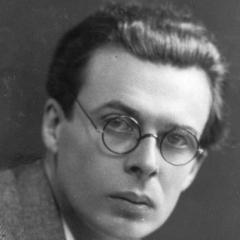
Aldous Huxley
Aldous Huxley

Aldous Huxley was an English writer and philosopher, renowned for his dystopian novel 'Brave New World'. Born on July 26, 1894, in Godalming, Surrey, England, he was the younger brother of the poet and critic Leonard Huxley. Huxley's works frequently delved into the interplay of science, politics, and philosophy, and he was a prominent figure in the literary movement known as the 'Lost Generation'. He passed away on November 22, 1963. more

You May Also Like

“And above all, what a strange attitude that actually is, when we no longer find Christian service worthwhile if the denarius of salvation may be obtained even without it! It seems as if we want to be rewarded, not just with our own salvation, but most especially with other people's damnation - just like the workers hired in the first hour. That is very human, but the Lord's parable is particularly meant to make us quite aware of how profoundly un-Christian it is at the same time. Anyone who looks on the loss of salvation for others as the condition, as it were, on which he serves Christ will in the end only be able to turn away grumbling, because THAT kind of reward is contrary to the loving-kindness of God. -What It Means To Be A Christian”

“The war on Christianity was also made manifest in the efforts to introduce neopaganism into the lives of the people. Joseph Ratzinger recalled that a young teacher in the village erected a maypole as a symbol of the pagan concept of the “life force.” He organized festivals for the summer solstice in homage to the sacredness of nature and dismissed traditional notions of sin, virtue, and redemption as alien ideas imposed by the cultural imperialism of the Jewish and Roman religion of Christianity. The old religious ideas had to make way for the new order, and the new order demanded a new age. Sixty years later, in his memoirs, Cardinal Ratzinger compared the anti-Christian neopaganism of the Nazis with the anti-Christian neopaganism of our own day: “When nowadays I hear how in many parts of the world Christianity is criticized as a destruction of individual cultural identity and an imposition of European values, I am amazed at how similar the types of argumentation are and at how familiar many a turn of phrase sounds.”

“The boardroom is more than just a meeting space; it's a crucible where the future of a company is forged. It's a dynamic arena where individuals with diverse backgrounds, experiences, and perspectives converge to make decisions that can profoundly impact the lives of employees, shareholders, customers, and communities.”