Quotessence
Home / Quotes / Quote by Stephen Dobyns

Quote by Stephen Dobyns

“...yes, we were pretty good boys. After all, we were the future middle class. "...By then some of us had behaved badly. There were illegitimate children, petty theft, various forms of betrayal. But, even so, I think we would have called ourselves basically good. And if a few of us had gotten into trouble, we could point to complicated circumstances, weaknesses, errors of judgement; yet even with these lapses we would still have claimed a certain morality. We were decent, or hoped we were. But where does it change? ... It depends on what you want and how much you want it and how you place yourself in relation to the generally accepted system of morality. You know that old argument that some people have the right to set aside conventional morality because of their superiority or whatever? Clearly, there are people who do terrible things and are able to justify their misconduct by need or superiority or by saying they weren't responsible. But if these things continue and if you're unable to avoid self-deception, then you reach a point where you have to say, No, I am not a good person. I have behaved badly. That is the first admission. The second admission is that I will continue to behave badly.”

Quote by Stephen Dobyns

Work

The Two Deaths of Senora Puccini

Browse quotes and source details for this work. more

Author
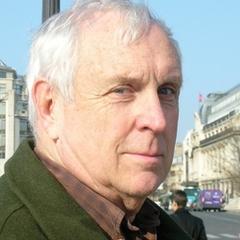
Stephen Dobyns
Stephen Dobyns

Stephen Dobyns is an American poet born on February 19, 1941. His poetry is known for its profound emotion and rich imagination, covering a wide range of themes including love, death, history, and religion. more

You May Also Like

“I was now somewhat reformed in my outward conduct, but the 'renewing in the spirit of my mind', if begun, was scarcely discernible. As my life was externally less wicked and ungodly, my heart grew most proud; the idol self was the object of my adoration and obeisance; my worldly advancement was more eagerly sought than ever; some flattering prospects seemed to open, and I resolved to improve my advantages to the uttermost.”

“Is life meaninglessness, without a fundamental purpose? Alternatively, must each of us proclaim a distinctive purposefulness for living? Is happiness a desired goal, and if so, what is personal happiness? Does happiness coincide with truthfulness? People intuitively seek happiness. How does a person haunted by memories of failure attain happiness? Should a person strive to realize an enviable social status and becoming fabulously wealthy (i.e. achieving fame and fortune)? Is happiness a mental state that instigates from a person leading a life that gives them maximize pleasure derived from their personal efforts? Does each person have the tools to achieve personal happiness? Is personal happiness a matter of making the right choices in life, of living a good life? Is the key to enjoying a happy life striving to obtain physical comfort, mental stimulation, and emotional wellbeing? Does a person achieve happiness by making choices in life that will enhance their degree of pleasure, lessen their degree of pain, and reduce their amount of personal sacrifice? Alternatively, does achieving a happy life require living virtuously by demonstrating honest work and helping other people? Can eradicating self-deception lead me to discovering a unique purpose in life that heretofore eluded me? Perhaps a creative course of constructive achievement will provide a glimmering moment of happiness.”

“To a friend, in an unguarded moment, he [Maxim Gorky, 1932] declared his ambition: simply to portray the world and man as they were, without the myth of love, ‘repudiating nothing, praising nothing’; repudiation was unjust, while praise was premature—‘for we live in chaos and ourselves are fragments of chaos.’ He compared his desire with Einstein, ‘trying to alter radically our representation of the universe.”

“On the whole, people deceive themselves through lack of courage rather than lack of clarity about the predicament in which they find themselves-- one may deceive oneself because one lacks the courage to face the implications of one's experience, or simply because that experience is so confused and puzzling that one opts for a relatively non-threatening interpretation of it.”