Quotessence
Home / Quotes / Quote by Kathi Appelt

Quote by Kathi Appelt

Work

The Underneath

A profound narrative that delves into the intricate relationship between humans and the natural world, offering a contemplative look at the cycles of life and death. more
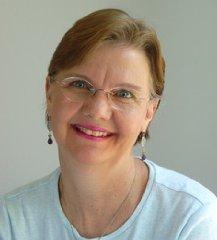
Author

Kathi Appelt
Kathi Appelt

Kathi Appelt is an American author known for her children's literature. Born on July 6, 1954, she has been writing since 1988 and has published numerous works, including 'The Underneath' and 'The Underneath, The Daughters of Eve', which have won multiple awards. more

You May Also Like

“We become servants of and prisoners to our stories. Given that our stories are efforts to interpret the world and make it more knowable and more manageable, we come to depend on them to carry us through ever new situations. The good news rising from our stories is that often our interpretive fiction allows us to build on our knowledge, bind our days together and have reasonably coherent personality. The bad news that those same stories also impose the paradigm, the limited and limiting lense of the former onto the immediacy of the new. Thus we create patterns, whether intended or not. And we become prisoners of what we depend upon. Even when we find our choices and their subsequent patterns problematic even destructive to us and others, we perpetuate them because they are familiar, perhaps at that hour they are the only way we can see the world. This leads to the repetition-compulsion which over the lifetime dots our histories with stock places, blockages and replicative reenactments. It is so hard for any of us to realize that we are not what happened to us. What happened to us was an external manifestation by fate, but our story about that is uniquely ours.”

“There is in all things a pattern that is part of our universe. It has symmetry, elegance, and grace - those qualities you find always in that which the true artist captures. You can find it in the turning of the seasons, in the way sand trails along a ridge, in the branch clusters of the creosote bush or the pattern of its leaves. We try to copy these patterns in our lives and our society, seeking the rhythms, the dances, the forms that comfort. Yet, it is possible to see peril in the finding of ultimate perfection. It is clear that the ultimate pattern contains its own fixity. In such perfection, all things move towards death.”

“¿Por qué, entonces, nos ha dado Dios el libre albedrío? Porque el libre albedrío, aunque haga posible el mal, es también lo único que hace que el amor, la bondad o la alegría merezcan la pena tenerse. Un mundo de autómatas —de criaturas que funcionasen como máquinas— apenas merecería ser creado. La felicidad que Dios concibe para Sus criaturas más evolucionadas es la felicidad de estar libre y voluntariamente unidas a Él.”