Quotessence
Home / Quotes / Quote by Christopher Lasch

Quote by Christopher Lasch

Work

The Culture of Narcissism: American Life in an Age of Diminishing Expectations

This work presents a critical analysis of American social character, contending that traditional structures of meaning and authority weakened during the 1960s and 1970s, producing widespread psychological preoccupation with self-image and personal gratification. The author examines how therapeutic culture, consumer capitalism, and the decline of civic engagement contributed to a society oriented toward immediate emotional satisfaction rather than long-term purpose or communal obligation. Drawing on historical, psychological, and cultural sources, the book traces the emergence of what it describes as a new form of selfhood—one characterized by shallow relationships, competitive individualism, and dependence on external validation. The analysis connects these psychological patterns to broader economic and political developments, including stagflation, the erosion of the welfare state, and the rise of managerial elites. While controversial upon publication, the work became influential in discussions of American cultural decline and remains frequently cited in debates about social media, celebrity culture, and contemporary self-absorption. more

Author
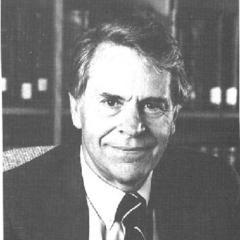
Christopher Lasch
Christopher Lasch

Christopher Lasch (June 1, 1932 - February 14, 1994) was an American historian known for his critical analysis of modern American culture and society. His work explored themes such as individualism, consumerism, and the decline of morality, which had a profound impact on contemporary American society. more

You May Also Like

“Had he lived some centuries ago, in the brightly coloured civilisations of the past, he would have had a definite status, his rank and his income would have corresponded. But in his day the angel of Democracy had arisen, enshadowing the classes with leathern wings, and proclaiming, “All men are equal — all men, that is to say, who possess umbrellas,” and so he was obliged to assert gentility, lest he slip into the abyss where nothing counts, and the statements of Democracy are inaudible.”

“I see them standing at the formal gates of their colleges, I see my father strolling out under the ochre sandstone arch, the red tiles glinting like bent plates of blood behind his head, I see my mother with a few light books at her hip standing at the pillar made of tiny bricks with the wrought-iron gate still open behind her, its sword-tips black in the May air, they are about to graduate, they are about to get married, they are kids, they are dumb, all they know is they are innocent, they would never hurt anybody. I want to go up to them and say Stop, don't do it--she's the wrong woman, he's the wrong man, you are going to do things you cannot imagine you would ever do, you are going to do bad things to children, you are going to suffer in ways you never heard of, you are going to want to die. I want to go up to them there in the late May sunlight and say it, her hungry pretty blank face turning to me, her pitiful beautiful untouched body, his arrogant handsome blind face turning to me, his pitiful beautiful untouched body, but I don't do it. I want to live. I take them up like the male and female paper dolls and bang them together at the hips like chips of flint as if to strike sparks from them, I say Do what you are going to do, and I will tell about it”

“Our goals are simple enough to understand: we want to humanize the planet, to break down the national structures which separate us as people, the corporate structures which separate us into distinct classes, the racist structures which separate us according to skin color; to conserve air, water, life in its many forms; to create communities which are more than habitable—communities in which people are free, in which people have what they need, in which groups of people do not accumulate power, or money, or goods, through the exploitation of other people.”

“Once... Well, not once, not at all once. Many many many many times, there was a person who worked hard, a person who tried to work hard, and tried to do their best, and tried to do well by their family, and tried to be good, and tried to do better. Many many times they tried this. And so. The person became who they always were-- who we all always are-- A Person Trying. So they all tried and they tried and they looked around at the mountains of effort that they had built with their trying at the piles of half-built bests at the heaps of family at the hills of good enough hills and better next time, and as they looked around, as they took in the view, they saw what they had done to make the life that they had lived. And they looked to the left and saw what you had done to try to make the life that you have lived, and they took in that view. And they looked to the right and saw what you had done to try to make the life that you have lived, and they took in that view. They took it all in. And in their estimation they found all of it, their view over all of it, the sum of all of it, to be fair.”