Quotessence
Home / Authors / Christopher Lasch
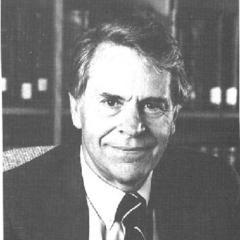
Christopher Lasch

Christopher Lasch Quotes

Historian

Filter quotes by topic

Famous Christopher Lasch Quotes

“Our growing dependence on technologies no one seems to understand or control has given rise to feelings of powerlessness and victimization. We find it more and more difficult to achieve a sense of continuity, permanence, or connection with the world around us. Relationships with others are notably fragile; goods are made to be used up and discarded; reality is experienced as an unstable environment of flickering images. Everything conspires to encourage escapist solutions to the psychological problems of dependence, separation, and individuation, and to discourage the moral realism that makes it possible for human beings to come to terms with existential constraints on their power and freedom.”

“In the nineteenth century wealthy families were typically settled, often for several generations, in a given locale. In a nation of wanderers their stability of residence provided a certain continuity. Old families were recognizable as such, especially in the older seaboard cities, only because, resisting the migratory habit, they put down roots. Their insistence on the sanctity of private property was qualified by the principle that property rights were neither absolute nor unconditional. Wealth was understood to carry civic obligations. Libraries, museums, parks, orchestras, universities, hospitals, and other civic amenities stood as so many monuments to upper-class munificence.”

“The difficulty of limiting the influence of wealth suggests that wealth itself needs to be limited. When money talks, everybody else is condemned to listen. For that reason a democratic society cannot allow unlimited accumulation. Social and civic equality presuppose at least a rough approximation of economic equality. A "plurality of spheres," as Walzer calls it, is eminently desirable, and we should do everything possible to enforce the boundaries among them. But we also need to remember that boundaries are permeable, especially where money is concerned, that a moral condemnation of great wealth must inform any defense of the free market, and that moral condemnation must be backed up with effective political action.”

“The last time the "best and brightest" got control of the country, they dragged it into a protracted, demoralizing war in Southeast Asia, from which the country has still not fully recovered. Yet Reich seems to believe that a new generation of Whiz Kids can do for the faltering American economy what Robert McNamara's generation failed to do for American diplomacy: to restore, through sheer brainpower, the world leadership briefly enjoyed by the United States after World War II and subsequently lost not, of course, through stupidity so much as through the very arrogance the "arrogance of power," as Senator William Fulbright used to call it to which the "best and brightest" are congenitally addicted. This arrogance should not be confused with the pride characteristic of aristocratic classes, which rests on the inheritance of an ancient lineage and on the obligation to defend its honor. Neither valor and chivalry nor the code of courtly, romantic love, with which these values are closely associated, has any place in the world view of the best and brightest. A meritocracy has no more use for chivalry and valor than a hereditary aristocracy has for brains. Although hereditary advantages play an important part in the attainment of professional or managerial status, the new class has to maintain the fiction that its power rests on intelligence alone. Hence it has little sense of ancestral gratitude or of an obligation to live up to responsibilities inherited from the past. It thinks of itself as a self-made elite owing its privileges exclusively to its own efforts. Even the concept of a republic of letters, which might be expected to appeal to elites with such a large stake in higher education, is almost entirely absent from their frame of reference.”

“As long as political movements exercise a fatal attraction for those who seek to drown the sense of personal failure in collective action - as if collective action somehow precluded rigorous attention to the quality of personal life - political movements will have little to say about the personal dimension of social crisis.”

“The denial of age in America culminates in the prolongevity movement, which hopes to abolish old age altogether. But the dread of age originates not in the "cult of youth" but in a cult of the self. Not only in its narcissistic indifference to future generations but in its grandiose vision of a technological utopia without old age, the prolongevity movement exemplifies the fantasy of "absolute, sadistic power" which, according to Kohut, so deeply colors the narcissistic outlook. Pathological in its psychological origins and inspiration, superstitious in its faith in medical deliverance, the prolongevity movement expresses in characteristic form the anxieties of a culture that believes it has no future.”

“The parents' failure to serve as models of disciplined self-restraint or to restrain the child does not mean that the child grows up without a superego. On the contrary, it encourages the development of a harsh and punitive superego based largely on archaic images of the parents, fused with grandiose self-images. Under these conditions, the superego consists of parental introjects instead of identifications. It holds up to the ego an exalted standard of fame and success and condemns it with savage ferocity when it falls short of that standard. Hence the oscillations of self-esteem so often associated with pathological narcissism.”

“The culture wars that have convulsed America since the sixties are best understood as a form of class warfare, in which an enlightened elite (as it thinks of itself) seeks not so much to impose its values on the majority (a majority perceived as incorrigibly racist, sexist, provincial, and xenophobic), much less to persuade the majority by means of rational public debate, as to create parallel or "alternative" institutions in which it will no longer be necessary to confront the unenlightened at all.”

“The current catchwords—diversity, compassion, empowerment, entitlement—express the wistful hope that deep divisions in American society can be bridged by goodwill and sanitized speech. We are called on to recognize that all minorities are entitled to respect not by virtue of their achievements but by virtue of their sufferings in the past. Compassionate attention, we are told, will somehow raise their opinion of themselves; banning racial epithets and other forms of hateful speech will do wonders for their morale. In our preoccupation with words, we have lost sight of the tough realities that cannot be softened simply by flattering people's self-image. What does it profit the residents of the South Bronx to enforce speech codes at elite universities?”

“In 1925, the central committee of the Soviet Communist party declared that sport should be consciously used "as a means of rallying the broad masses of workers and peasants around the various Party Soviet and Trade Union organizations through which the masses of workers and peasants are to be drawn into social and political activity." Fortunately, people of all nations intuitively tend to resist such exhortations. They know that games remain gloriously pointless and that watching an exciting athletic contest, moreover, can be emotionally almost as exhausting as participation itself—hardly the "passive" experience it is made out to be by the guardians of public health and virtue.”

“We do not need to minimize the poverty of the ghetto or the suffering inflicted by whites on blacks in order to see that the increasingly dangerous and unpredictable conditions of middle-class life have given rise to similar strategies for survival. Indeed the attraction of black culture for disaffected whites suggests that black culture now speaks to a general condition.”

“Advertising serves not so much to advertise products as to promote consumption as a way of life. It 'educates' the masses into an unappeasable appetite not only for goods but for new experiences and personal fulfillment.”