“Take any action allow’d to be vicious: Wilful murder, for instance. Examine it in all lights, and see if you can find that matter of fact, or real existence, which you call vice. In which-ever way you take it, you find only certain passions, motives, volitions and thoughts. There is no other matter of fact in the case. The vice entirely escapes you, as long as you consider the object. You never can find it, till you turn your reflexion into your own breast, and find a sentiment of disapprobation, which arises in you, towards this action. Here is a matter of fact; but ’tis the object of feeling, not of reason. It lies in yourself, not in the object. So that when you pronounce any action or character to be vicious, you mean nothing, but that from the constitution of your nature you have a feeling or sentiment of blame from the contemplation of it. Vice and virtue, therefore, may be compar’d to sounds, colours, heat and cold, which, according to modern philosophy, are not qualities in objects, but perceptions in the mind”
Quote by David Hume
Work
A Treatise of Human Nature
This seminal text delves into the fundamental aspects of human nature, including perception, reason, and moral sense, offering a comprehensive analysis of human experience and knowledge. more
Author
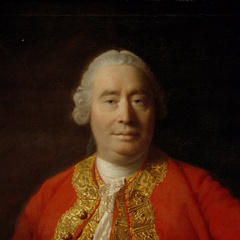
David Hume
David Hume, born on May 7, 1711, in Edinburgh, Scotland, and died on August 25, 1776, was an outstanding philosopher, historian, and economist. Known for his contributions to empiricism and skepticism, his works have had a profound impact on subsequent philosophy, economics, and psychology. more
You May Also Like
Source: Bulletproof Backbone: Injustice Not Allowed on My Watch
Source: Philosophy for Busy People: Everything You Really Should Know
Source: Wise Blood
“The more you try to hide the truth the more you expose it.”
“Truth has never been conquered, not even by the mightiest armies.”
“If you point to truth, all liars will see are your fingers.”