Quotessence
Home / Quotes / Quote by Sun Tzu

Quote by Sun Tzu

“Where the army is, prices are high; when prices rise the wealth of the people is exhausted. When wealth is exhausted the peasantry will be afflicted with urgent exactions.”

Quote by Sun Tzu

Work

The Art of War

This seminal work explores the principles of warfare, leadership, and conflict resolution, offering timeless insights into the nature of power and the art of winning battles without resorting to brute force. more
Author

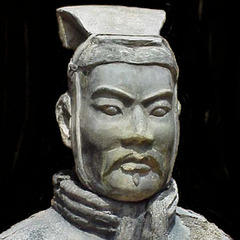
Sun Tzu
Sun Tzu

Sun Tzu, born around 544 BC and died around 496 BC, was a renowned Chinese military strategist. His military thoughts are mainly reflected in his book 'The Art of War', which is considered the classic of military strategy and has had a profound impact on various fields such as military, politics, and economics in later generations. more

You May Also Like

“I am not dead. Death does not exist. I am alive! That is the purpose of this tale, to let everyone know that they do go on and that they don't need to be afraid, as I was afraid. Yet I also have a selfish reason for wanting my story told. I was young when I died. I didn't have a chance to make my mark in the world. I didn't do anything unique, nothing that will change the course of history. But I wasn't a bad girl. I don't want to be forgotten. I want people to remember me.”

“Most people would probably call me a ghost. I am, after all, dead. But I don't think of myself that way. It wasn't so long ago that I was alive, you see. I was only eighteen. I had my whole life in front of me. Now I suppose you could say I have all of eternity before me. I'm not sure exactly what that means yet. I'm told everything's going to be fine. But I have to wonder what I would have done with my life, who I might have been. That's what saddens me most about dying--that I'll never know.”

“Snad to bylo i tím, co všechno jsem slyšel od pana profesora, který se překonával v nadávání, žádný kočí nedovedl tak nadávat ani koním, ani lidem tak, jako pan profesor francouzské literatury a estetiky..., a přitom nám vykládal o všem, co zajímalo i jej, vykládal každý večer, ještě jsem otvíral dveře, a on než usnul, než jsme usnuli, tak do poslední chvíle vykládal taky, co je estetika a co je etika a o filozofii a filozofech, vždycky o těch filozofech vykládal tak, Krista Pána nevyjímaje, že to je banda raubířů a syčáků a vrahounů a darebáků, že kdyby nebyli, bylo by lidstvu líp, ale lidstvo že je potomstvo zlé a blbé a zločinné, a tak snad ten profesor mě utvrdil v tom, že je třeba být sám, že večer jsou vidět hvězdy a v poledne jen hluboké studny...”

“Rar vei întalni un om mai invidios decît un profesor. Şiruri de studenţi se perindă ani de-a rîndul, asemenea apelor unui rîu. Ei curg înainte, iar profesorul rămîne în urmă, ca o stîncă adîncă înfiptă în albia curentului. Deşi poate depăna altora povestea speranţelor lui, el nu le mai visează. Se crede neînsemnat şi ori lunecă într-un masochism solitar, ori, în lipsa lui, devine bănuitor şi mistic, denunţînd mereu excentricităţile altora, îi este atît de dor de libertate, de activitate, încît nu poate decît să-i urască pe cei din jur.”