Quotessence
Home / Quotes / Quote by Diane Ravitch

Quote by Diane Ravitch

Work

The Death and Life of the Great American School System: How Testing and Choice Are Undermining Education

This book delves into the effects of standardized testing and school choice initiatives on the quality and accessibility of education in the United States. more

Author
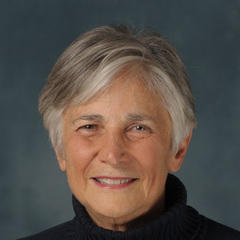
Diane Ravitch
Diane Ravitch

Diane Ravitch is an American historian and education policy analyst. She is recognized for her extensive work in the field of education, particularly her research on the history of American education and her criticism of the No Child Left Behind Act. more

You May Also Like

“Over the centuries, this interpretation and reinterpretation creates a long chain connecting a writer to all future readers- who frequently read each other as well as the original. Virginia Woolf had a beautiful vision of generations interlinked in this way: of how "minds are threaded together- how any live mind is of the very same stuff as Plato's & Euripides... It is this common mind that binds the whole world together; & all the world is mind." This capacity for living on through readers' inner worlds over long periods of history is what makes a book like the 'Essays' a true classic. As it is reborn differently in each mind, it also brings those minds together.”

“Excerpt from the endnote on the audiobook read by the author: "There have been so many interpretations of the story that I am not going to choose between them. Make your own choice. They contradict each other, the various choices. the only choice that really matters, the only interpretation of the story, if you want one, is your own. Not your teacher's, not your professor's, not mine, not a critic's, not some authority's. The only thing that matters is first, the experience of being in the story, moving through it. Then, any interpretation you like, if it is yours, that's the right one. Because what's in a book is not what an author thought he put into it, it's what the reader gets out of it.”

“The rub is that any work of nonsense abounds with so many inviting symbols that you can start with any assumption you please about the author and easily build up an impressive case for it. Consider, for example, the scene in which Alice seizes the end of the White King's pencil and begins scribbling for him. In five minutes one can invent six different interpretations.”

“(Cyril and Alice talking about Maude Avery and her books) 'I occasionally get letters from students asking for help with their theses.' 'And do you offer it?' 'No. It's all there in the books themselves. There's nothing much I can add that would be of any use to anyone.' 'You're right,' said Alice. 'So why any of them feel the need to talk about their work in public or give interviews is beyond me. If you didn't say what you wanted to say in the pages themselves, then surely you should have done another draft.' (p. 271)”