“On August 21, the Soviet defense minister, Dmitry Yazov, gave the order for troops to be withdrawn from Moscow. The State Committee for the State of Emergency had lost, and along with it, the U.S.S.R. had, too. On returning from his dacha in Crimea, Gorbachev evidently expected to be greeted by rejoicing crowds as a liberated hero. People were happy to see him back, but only as further evidence that the putsch committee had been defeated. Gorbachev's expectation of consolidating his authority on a surge of support came to nothing. All the admiration and support was for Yeltsin and a new government, the people who had taken risks and acted resolutely. This was strengthened when testimony was produced suggesting that Gorbachev might have had a part in preparing the conspiracy, or at least knew of it in advance and, in his usual way, decided not to take sides either with the Soviet conservatives or with the Russian reformers but to wait and see who came out on top. Indecision is a cardinal sin in an era of change. In an instant, Gorbachev lost everything. Once again, as happens during revolutions, something mind-blowing had occurred. On Monday he was, if not the most popular of leaders, the universally acknowledged president of a vast nation, with power over the world's largest army and over the industry and agricultural enterprises of a territory covering one-sixth of the world's land area-and the power to start a nuclear war. Come Thursday, he was nobody. He still retained a personal limousine, his secretaries, and a special telephone, only now no one was calling him. Whatever might be documented in seemingly unchallengeable statutes protected by a constitution and an army of lawyers, the center of power had shifted to Yeltsin, transferred in some intangible manner. Nobody really understands exactly how it happened, but neither was anyone in any doubt that the transfer of power had taken place. On December 8, 1991, the Republic of Belarus, the Russian Soviet Federative Socialist Republics, and Ukraine pulled of a spectacular ruse. Their leaders, Stanislav Shushkevich, Boris Yeltsin, and Leonid Kravchuk, met in a forest in Belarus, where they declared that, since their three republics had been the founders of the U.S.S.R., they had the right to dissolve it, which they would proceed to do. In its place they established the Union of Independent States. From their point of view, the trick made good sense: the presidents of the republics wanted to put Gorbachev and all his officials out of contention and to seize unfettered power for themselves. That is what was behind their action, and to implement it they needed formally to put an end to the indestructible U.S.S.R. Nowadays, people go on about what a mistake that action-the Belovezha Accords-was. One of those publicly lamenting it is Vladimir Putin. With great intensity and passion, he claims the accords was "a major geopolitical disaster." Well, it didn't seem like that to me at the time (and I'm not claiming to be a repository of objective truth, just relaying what my feelings were). It was just one more item on the television news-well, perhaps an item that rated a bit more discussion that usual, but there was no sense of portentousness. If those who gathered in the woods executed a crafty and, to be honest, rather deceitful and devious legalistic maneuver, they were only confirming something that was already obvious, namely that the U.S.S.R. no longer existed as a real country.”
Quote by Alexei Navalny
Book:Patriot: A Memoir
Work
Patriot: A Memoir
Browse quotes and source details for this work. more
Author
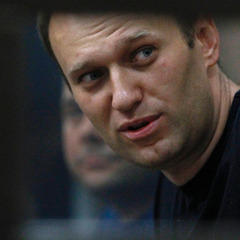
Alexei Navalny
Alexei Navalny is a Russian lawyer and political activist recognized for his anti-corruption efforts and criticism of the Russian government. Born on June 4, 1976, he has gained international acclaim for his work in exposing corruption within the Russian political establishment. more
You May Also Like
“The financial elite already have the politicians in their pockets, as a result of their lobbying.”
Source: Terror on Wall Street, a Financial Metafiction Novel
“And I said, 'Do I have leprosy?' And they said, 'You are a dangerous element.”
Source: Le Mage du Kremlin
Source: Le Mage du Kremlin
“We elected a new government. You can express your condolences.”
Source: Yet Another New Land
“The money you make is a symbol of the value you create.”
Source: Wealth for All: Living a Life of Success at the Edge of Your Ability
Source: What is Wrong with Society Today