Quotessence
Home / Quotes / Quote by George Orwell

Quote by George Orwell

Work

Down and Out in Paris and London

This book is a candid account of the author's time living in poverty, focusing on his struggles in Paris and London. It offers insights into the challenges faced by the underprivileged and provides a glimpse into the social and economic conditions of the time. more

Author
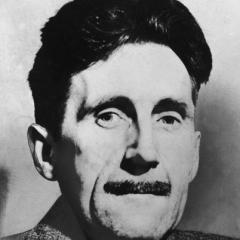
George Orwell
George Orwell

George Orwell, born Eric Arthur Blair, was a British novelist and political critic. Known for his sharp social criticism and profound insights into totalitarianism, Orwell is best remembered for his novels '1984' and 'Animal Farm', which remain influential to this day. more

You May Also Like

“I've never understood it,' continued Wilfred Carr, yawning. 'It's not in my line at all; I never had enough money for my own wants, let alone for two. Perhaps if I were as rich as you or Croesus I might regard it differently.' There was just sufficient meaning in the latter part of the remark for his cousin to forbear to reply to it. He continued to gaze out of the window and to smoke slowly. 'Not being as rich as Croesus - or you,' resumed Carr, regarding him from beneath lowered lids, 'I paddle my own canoe down the stream of Time, and, tying it to my friends' doorposts, go in to eat their dinners.' ("The Well")”

“I live in a world in which 40 men control wealth equal to that of nearly 80 countries, where to maintain their hegemony, countless acts of mayhem and massacre must occur every day. This is the reality that forms and reforms my days as it does those of all people on this hapless planet. I do not think any more that writing - mine or another's - can change the world. Perhaps in their small way, writers can answer for those who are voiceless in their extreme deprivation and suffering, but at best, in the very smallest scheme, writing can provide a moment of grace, both for her who writes and him who reads, in a very dark world.”

“The system that rewards performance over substance is the water the organization swims in, and the fish that most clearly perceives the water is not the fish that survives the competition — it is the fish that stops swimming.”

“From books, I winnowed the glue that held together my psyche as it struggled to stay whole. It was from stories and myths that I learned to dream, to imagine a different life, to realize potentials and probabilities other than those of the painful, poverty-mired existence I found myself in as a child. With a book I could hide in a corner, safe from the heavy hand and belt of my stepfather, and for a while not worry about where our next meal would come from, or where we would be sleeping that night, or when my mother would break and have to be sent yet again to the mental institution. Books, for me, we tiny life rafts that I clung to desperately.”