Quotessence
Home / Quotes / Quote by Christopher Marlowe

Quote by Christopher Marlowe

“Mephistopheles: Why, this is hell, nor am I out of it. Think'st thou that I, who saw the face of God And tasted the eternal joys of heaven, Am not tormented with ten thousand hells In being deprived of everlasting bliss?”

Quote by Christopher Marlowe

Work

Dr. Faustus

The play follows the protagonist Faustus, a scholar who sells his soul to the devil in exchange for knowledge and power. It explores themes of ambition, moral decay, and the consequences of one's actions. more
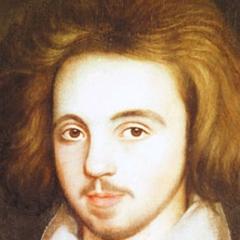
Author

Christopher Marlowe
Christopher Marlowe

Christopher Marlowe was an English dramatist, poet, and translator of the Elizabethan era. He is known for his work in the development of English drama, particularly his use of blank verse and his portrayal of antiheroes. Marlowe's plays, including 'Doctor Faustus' and 'Tamburlaine the Great', are considered foundational in the English Renaissance. more

You May Also Like

“For the first time, a look of uncertainty flickered across Tigercalw's face, as the few cats he had trusted turned him down. "What about you, Dusteplt?" he demanded. "You'll have richer pickings with me than ever you will in ThunderClan." The young brown tabby got deliberately to his paws and picked his way through the surrounding cats until he stood in front of Tigerclaw. "I looked up to you," he meowed in a clear, level voice. "I wanted to be like you. But Redtail was my mentor. I owe him more than any cat. And you killed him." Grief an fury made his limbs shake, but he kept going. "You killed him and betrayed the Clan. I'd rather die than follow you." He turned and stalked away. A murmur of appreciation rose from the listening cats and Fireheart heard Whitestorm whisper, "Well said, youngster.”

“Rogers would most likely be among the first to remind us that he was not "all things to all people" (1 Cor. 9:22). He was just himself, with all his strengths and weaknesses, all his advantages and limitations, and he was that way for reasons unique to his own personal history, many of which we will never know. But perhaps we would do well, when pinpointing his shortcomings, to recall that in his own prayer life Rogers often sought divine guidance and wisdom—and especially forgiveness for those times he fell short of unconditional love.”

“...Rogers offered this definitive observation to a meeting of the American Academy of Child Psychiatry: "It's easy to convince people that children need to learn the alphabet and numbers...How do we help people to realize that what matters even more than the superimposition of adult symbols is how a person's inner life finally puts together the alphabet and numbers of his outer life? What really matters is whether he uses the alphabet for the declaration of war or the description of a sunrise--his numbers for the final count at Buchenwald or the specifics of a brand-new bridge.”

“Ewww gross! I can't believe you thought I'd copulate with him." I cringe. "Please don't ever use that word again." "Copulate? What's wrong with it?" I make a face at her. "Nothing, just... never say it again in my presence." "What about fornicate?" Ugh , this is why I don't want kids. Was I this annoying as a teenager? "No." "Coitus?" "No." "Intercourse?" I glower at her. "It's fucking. Making love if you're into that wishy-washy bullshit, and sex if it's meaningless. No other terms." "Not even boinking?”

“So what exactly is HOW? For many, business and life has always been about the pursuit of What: “What do we do? What’s on the agenda? What do we need to accomplish?” Whats are commodities; they are easily duplicated or reverse-engineered and delivered faster and at a lower cost by someone else. How is a philosophy. It's a way of thinking about individual and organizational behavior. And How we do what we do – our behavior – has become today’s greatest source of our advantage. In this world, How is no longer a question, but the answer to what ails us as people, institutions, companies, nations. How we behave, how we consume, how we build trust in our relationships and how we relate to others provides us with the power to not just survive, but thrive and endure.”