Quotessence
Home / Quotes / Quote by John Updike

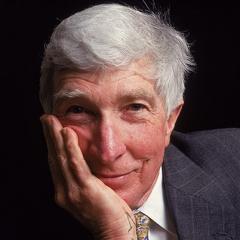
Quote by John Updike

“He sees now that he is rich that these were the [shore] outings of the poor, ending in sunburn and stomach upset. Pop liked crabcakes and baked oysters but could never eat them without throwing up. When the Model A was tucked into the garage and little Mim tucked into bed Harry could hear his father vomiting in a far corner of the yard. He never complained about vomiting or about work, they were just things you had to do, one more regularly than the other.”

Quote by John Updike

Work

Rabbit is Rich

This book delves into the lives of the wealthy and the poor in a society recovering from war, examining the impact of wealth on individuals and society at large. more

Author

John Updike
John Updike

John Updike was an American novelist known for his profound insights into middle-class life and his delicate narrative skills. His works spanned a wide range of genres from short stories to novels, including the classic 'Rabbit, Run' series and 'The Centaur'. more

You May Also Like

“She understood that it had never just been about talent: it had also always been about money. Ethan was brilliant at what he did, and he might well have made it even if Ash’s father hadn’t encouraged him, but it really helped that Ethan had grown up in a sophisticated city, and that he had married into a wealthy family. Ash was talented, but not all that talented. This was the thing that no one said, not once. But of course it was fortunate that Ash didn’t have to worry about money while trying to think about art. Her wealthy childhood had given her a head start, and now Ethan had picked up where her childhood had left off.”

“George Gey paid his way through a biology degree at the University of Pittsburgh by working as a carpenter and mason, and he could make nearly anything for cheap or free. During his second year in medical school, he rigged a microscope with a time-lapse motion picture camera to capture live cells on film. It was a Frankensteinish mishmash of microscope parts, glass, and 16-millimeter camera equipment from who knows where, plus metal scraps, and an old motor from Shapiro’s junkyard. He built it in a hole he’d blasted in the foundation of Hopkins, right below the morgue, its base entirely underground and surrounded by a thick wall of cork to keep it from jiggling when streetcars passed. At night, a Lithuanian lab assistant slept next to the camera on a cot, listening to its constant tick, making sure it stayed stable through the night, waking every hour to refocus it. With that camera, Gey and his mentor, Warren Lewis, filmed the growth of cells, a process so slow - like the growth of a flower - the naked eye couldn’t see it. They played the film at high speed so they could watch cell division on the screen in one smooth motion, like a story unfolding in a flip book.”