“Of course he wasn't dead. He could never be dead until she herself had finished feeling and thinking. The kiss of his memory made pictures of love and light against the wall. Here was peace. She pulled in her horizon like a great fish-net. Pulled it from around the waist of the world and draped it over her shoulder. So much of life in its meshes! She called in her soul to come and see.”
Quote by Zora Neale Hurston
Work
Their Eyes Were Watching God
This novel follows the life of Janie Crawford, a woman who seeks independence and self-fulfillment in a society that limits her options. It delves into themes of identity, love, and the search for personal freedom. more
Author
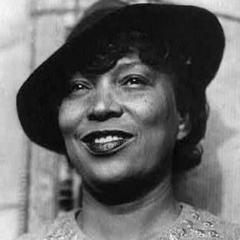
Zora Neale Hurston
Zora Neale Hurston (1891-1960) was an American anthropologist, folklorist, and novelist who played a pivotal role in the Harlem Renaissance. Born in Alabama and raised in Eatonville, Florida, she became the first African American student at Barnard College, Columbia University, studying under Franz Boas. Hurston is best known for her novel "Their Eyes Were Watching God," now considered a classic of American literature. She conducted extensive anthropological fieldwork in the American South and Caribbean, preserving African American folk traditions. Though largely forgotten after her death, her work was revived by Alice Walker in the 1970s, establishing her as a foundational figure in African American literature and anthropology. more
You May Also Like
“She was aware that reason had left the room. She was not sorry to see it go.”
Source: The Darren Effect
Source: Juno & Juliet
Source: Madness and Civilization: A History of Insanity in the Age of Reason
Source: Witches Abroad
“I never yet saw an instance of one of two disputants convincing the other by argument.”
“There is nothing so consistent with reason as this denial of reason.”
Source: Pensées
Source: Grendel
Source: Essays