Quotessence
Home / Quotes / Quote by John Gardner

Quote by John Gardner

“All order, I've come to understand, is theoretical, unreal — a harmless, sensible, smiling mask men slide between the two great, dark realities, the self and the world — two snake pits.”

Quote by John Gardner

Book:Grendel

Work

Grendel

Grendel is a narrative poem that delves into the life of a fearsome creature, Grendel, who attacks the Danish kingdom of Heorot. The poem, rich in symbolism and philosophical depth, examines the nature of good and evil, the role of the individual within a community, and the cyclical nature of violence. Written in a modern style, it challenges traditional heroic narratives and invites readers to reconsider the boundaries between human and monster. more
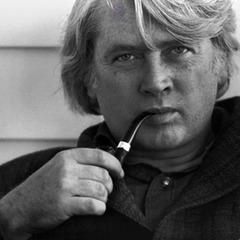
Author

John Gardner
John Gardner

John Gardner, born on July 21, 1933, was an influential American novelist of the mid-20th century. Known for his profound character development and imaginative storytelling, his works have been highly appreciated by readers. more

You May Also Like

“Since it has pleased God to endue us with some capacity of reason, to the end we may not, like brutes, be servilely subject and enslaved to the laws common to both, but that we should by judgment and a voluntary liberty apply ourselves to them, we ought, indeed, something to yield to the simple authority of nature, but not suffer ourselves to be tyrannically hurried away and transported by her; reason alone should have the conduct of our inclinations. I, for my part, have a strange disgust for those propensions that are started in us without the mediation and direction of the judgment.”

“The vainglory of wishing to understand is dangerous, immoral and, above all, old-fashioned. The modern way – perhaps the final way - is to say: Go forward, without knowing why, as quickly as possible, towards an unknown goal! To act and think are opposites which identify one only in the Absolute. To accomplish all one's movements – of the head, the arms, the legs – without ever quite attaining the status of a puppet, but with a certainty that gives one a feeling of rightness: that is what is nowadays held up as the ideal. Be citizens of Universal activity! Forget to be conscious of ourselves! The blind horse gallops without hesitation, not knowing where it is going, not caring where it has been: so let up put out our eyes!”

“I find it most offensive that the character of Reason, whom [Jean den Meun (author of the Romance of the Rose)] himself calls the daughter of God, should put forth such a statement as ... where she says by way of a proverb that "in the war of Love it is better to deceive than be deceived." And indeed I dare say that in making that statement Jean den Meun's Reason denied her Father, for the doctrine He gave was altogether different.”

“The fantastic in literature doesn't exist as a challenge to what is probable, but only there where it can be increased to a challenge of reason itself: the fantastic in literature consists, when all has been said, essentially in showing the world as opaque, as inaccessible to reason on principle. This happens when Piranesi in his imagined prisons depicts a world peopled by other beings than those for which it was created. ("On the Fantastic in Literature")”