Quotessence
Home / Quotes / Quote by Dallas Willard

Quote by Dallas Willard

“The first fruit of love is the musing of the mind on God. He who is in love, his thoughts are ever upon the object. He who loves God is ravished and transported with the contemplation of God. "When I awake, I am still with thee" (Psalm 139:18). The thoughts are as travelers in the mind. David's thoughts kept heaven-road. "I am still with Thee." God is the treasure, and where the treasure is, there is the heart. By this we may test our love to God. What are our thoughts most upon? Can we say we are ravished with delight when we think on God? Have our thoughts got wings? Are they fled aloft? Do we contemplate Christ and glory?... A sinner crowds God out of his thoughts. He never thinks of God, unless with horror, as the prisoner thinks of the judge.”

Quote by Dallas Willard

Work

Author

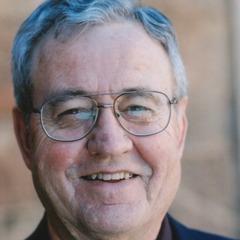
Dallas Willard
Dallas Willard

Dallas Willard was an American philosopher known for his contributions to practical theology and moral philosophy. His works explored faith, moral life, and spiritual practice, having a profound impact on contemporary Christian philosophy. more

You May Also Like

“Andy: But they gave us an out in the Land of Oz. They made us write. They didn't make us write particularly well. And they didn't always give us important things to write about. But they did make us sit down, and organize our thoughts, and convey those thoughts on paper as clearly as we could to another person. Thank God for that. That saved us. Or at least it saved me. So I have to keep writing letters. If I can't write them to you, I have to write them to someone else. I don't think I could ever stop writing completely.”

“I am in no mood to fulminate on paper--I wish the two of us were in a room together talking of what matters most, the air thick with affinity. In January a man crawls into a cave of hopelessness; he hallucinates sympathies catching fire. Letters are glaciers, null frigates, trapping us where we are in the moment, unable to carry us on toward truth.”

“Winter arrived with December, and the world continued to suffer the loss of the Internet and most forms of communication. Supply chains were disrupted. The only mass form of personal communication was the letter, and postal workers were having their worst year ever, as they were actually meeded. Food was becoming scarcer and more expensive, as was fuel for vehicles and heating. Major cities experienced riots on a regular basis, spurred on by religious fervor and want. Civilization was on the brink of collapse.”

“They say instant communication is not communication at all but merely a frantic, trivial, nerve-wracking bombardment of clichés, threats, fads, fashions, gibberish and advertising. However, who has not hung on a scripture, a quote, a statement, only to stumble upon the key phrase that brought all things to a turning point? The greatest sermons and speeches were pieced together by illuminating thoughts that powered men to surpass their own commonness. It is the sparkling magic of letters forming words, and those words colliding with passion, that makes statements into wisdom.”

“Znaš li da je mladi školski naraštaj silno glup ? Nekada je imao više pameti; zabavljao se ženama, mačevanjem, orgijama; sad se doteruje po Bajronu, sanja o očaju i do mile volje okiva sebi srce ... Utrkuju se ko će imati bleđe lice i najlepše reći : sit sam sveta ! Sit sveta ! Žalosno zaista : sit sveta u osamnaestoj godini ! Zar ne postoji više ljubav, slava, poslovi ? Zar je sve umrlo ? Nema više prirode, nema cveća za mladog čoveka ? Ostavimo se jednom toga. Dajmo se na tugu u umetnosti, pošto više osećamo tu stranu, ali dajmo se veselju u životu; neka puca zapušač, neka se drolja svlači, sto mu muka ! Pa ako nam neke večeri, u sumrak, dok za jedan čas traju magla i sneg, dođe neka dosada života, pustimo je neka dođe, ali ne često. Treba sebi češati srce s vremena na vreme sa malo bola, da sva gamad sa njega spadne. To je to što tebi savetujem, što se ja trudim da primenim. – Ernestu Ševalijeu, 15. Aprila 1839”