“The world had always loved the saint as being the nearest possible approach to the perfection of God. Christ, through some divine instinct in him, seems to have always loved the sinner as being the nearest possible approach to the perfection of man. His primary desire was not to reform people, any more than his primary desire was to a relieve suffering. To turn an interesting thief into a tedious honest man was not his aim. He would have thought little of the Prisoners’ Aid Society and other modern movements of the kind. The conversion of a publican into a Pharisee would not have seemed to him a great achievement. But in a manner not yet understood of the world he regarded sin and suffering as being in themselves beautiful holy things and modes of perfection. It seems a very dangerous idea. It is — all great ideas are dangerous. That it was Christ’s creed admits of no doubt. That it is the true creed I don’t doubt myself. Of course the sinner must repent. But why? Simply because otherwise he would be unable to realise what he had done. The moment of repentance is the moment of initiation. More than that: it is the means by which one alters one’s past. The Greeks thought that impossible. They often say in their Gnomic aphorisms, ‘Even the Gods cannot alter the past.’ Christ showed that the commonest sinner could do it, that it was the one thing he could do. Christ, had he been asked, would have said — I feel quite certain about it — that the moment the prodigal son fell on his knees and wept, he made his having wasted his substance with harlots, his swine-herding and hungering for the husks they ate, beautiful and holy moments in his life. It is difficult for most people to grasp the idea. I dare say one has to go to prison to understand it. If so, it may be worth while going to prison.”
Quote by Oscar Wilde
Author
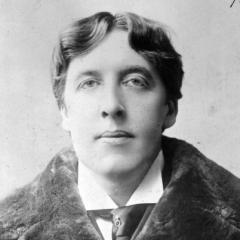
Oscar Wilde
Oscar Wilde, born on October 16, 1854, in Ireland, and died on November 30, 1900, was a renowned Irish writer, playwright, and poet. His works are known for their wit, satire, and unique style, with notable works including 'The Picture of Dorian Gray' and 'Lady Windermere's Fan'. more
You May Also Like
“The love of God is deeply rooted in sacrifice of His only Begotten Son, to save mankind from sin.”
Source: Gay Girl, Good God: The Story of Who I Was and Who God Has Always Been
“Since man ceases not to be sinful, it is a great blessing that Jehovah ceases not to be merciful.”
Source: The Treasury of David, Volumes #1-3
“. . . not only our works, but also our thoughts, are open before God.”
Source: First Apology of Justin Martyr
Source: God Transcendent
Source: Beauty Will Save the World
Source: Commentary on Mark