Quotessence
Home / Quotes / Quote by Philip Graham Ryken

Quote by Philip Graham Ryken

Work

King Solomon: The Temptations of Money, Sex, and Power

Browse quotes and source details for this work. more

Author
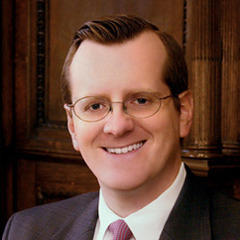
Philip Graham Ryken
Philip Graham Ryken

Philip Graham Ryken, born in 1966, is an accomplished scholar, writer, and theologian. He has had a significant impact in the fields of academia and religion. As a theologian, Ryken specializes in biblical studies and Christian ethics. He graduated from Westminster Theological Seminary and earned his doctorate there. His academic career began with a deep dive into the study of biblical texts, which gradually expanded to include theological theory and Christian ethics. Ryken's works cover a range of topics from biblical studies to theological theory and Christian ethics, and his writings have been widely translated and cited, profoundly influencing contemporary Christian thought. His works include 'A Survey of the Bible' and 'Christian Ethics,' which not only provide valuable resources for the academic community but also spiritual guidance for ordinary believers. Ryken's research is characterized by its depth and rigor, and his ideas are forward-thinking and inspiring, highly regarded by scholars and believers alike. more

You May Also Like

“Now if the teaching of Moses is inspired and Deuteronomy 13 and 18 tell you that future revelations must be judged according to previous revelation, and if the alleged future revelation of the Quran conflicts with the previous revelation of Moses, who has to go? By their own logic who has to go? The Qur'an has to go. Those who advocate the worldview of the Qur'an are not able to live according to their own worldview, there's this inconsistency”

“the argument is, if God is all-good and God is all-powerful how could any of these things happen, there's an inconsistency in your Christian worldview. The intellectual answer is there is no logical inconsistency because not only do we believe God is all-good and all-powerful, we also believe there's a morally sufficient reason for everything God does. That's one of our presuppositions, as Abraham said, shall not the Judge of all the earth do right [Genesis 18:25]. We believe that everything God does He does well for a good reason, that He is wiser than us, and even when things look tragic we know that God will bring good and His glory out of tragedy”

“The task of the apologist is not simply to show that there is no hope of eternal salvation outside of Christ, but also that the unbeliever has no present intellectual hope outside of Christ. It is foolish for him to build his house on the ruinous sands of human opinion, instead of the verbal rock of Christ (Matt. 7:24-27). He needs to see that those who suppress the truth of God in unrighteousness inescapably "become vain in their reasoning… Professing themselves to be wise, they become fools" (Rom. 1:21-22). Their opposition to the faith amounts to no more than a "knowledge falsely so called" (1 Tim. 6:20-21), by which they actually "oppose themselves" in ignorance (2 Tim. 2:23, 25).”

“In the nature of the case, God is the final authority. But if God's authority must be authorized or validated by the authority of human reasoning and assessment, then human thinking is more authoritative than God Himself — in which case God would not have final authority, and indeed would no longer be God. The autonomous man who insists that God can only be accepted if His word first gains the approval or agreement of man has determined in advance that God will never be acknowledged as God (the final authority).”

“I wish that people knew that anyone can file a frivolous lawsuit with false claims as well. I hate that the court of public opinion always weighs in on it without any facts or substantial evidence. People want to validate their hate toward others so much that this has become the norm.”

“If a woman had a right to wear a miniskirt, surely I had the right to choose my headscarf. My choice was a sign of independence of mind. Surely, to choose to wear what I wanted was an assertion of my feminism. I was a feminist, wasn't I? But I was to learn that choosing to wear the hijab is much easier than choosing to take it off. And that lesson was an important reminder of how truly "free" choice is.”