Quotessence
Home / Quotes / Quote by Stephen Crane

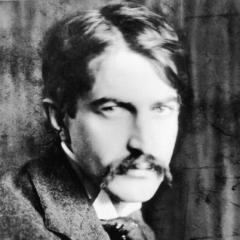
Quote by Stephen Crane

“When it occurs to a man that nature does not regard him as important, and that she feels she would not maim the universe by disposing of him, he at first wishes to throw bricks at the temple, and he hates deeply the fact that there are no brick and no temples. Any visible expression of nature would surely be pelleted with his jeers. Then, if there be no tangible thing to hoot he feels, perhaps, the desire to confront a personification and indulge in pleas, bowed to one knee, and with hands supplicant, saying: "Yes, but I love myself.”

Quote by Stephen Crane

Work

Open Boat

Browse quotes and source details for this work. more

Author

Stephen Crane
Stephen Crane

Stephen Crane was a prominent American author of the late 19th century, known for his realistic style and profound portrayals of war and poverty. His most famous work, 'The Red Badge of Courage,' is considered one of the greatest war novels in American literary history. more

You May Also Like

“You can say whatever you like to me. I make no moral judgments." Cassandra was slow to reply, momentarily distracted by his eyes. They were blue with dapples of brilliant green around the pupils, but one eye had far more green than the other. "Everyone makes judgments," she said in response to his statement. "I don't. My sense of rights and wrong is different from most people's. You could say I'm a moral nihilist." "What's that?" "Someone who believes nothing is innately right or wrong." "Oh, that's dreadful," she exclaimed. "I know," he said, looking apologetic. Perhaps some gently bred young women would have been shocked, but Cassandra was accustomed to unconventional people. She'd grown up with Pandora, whose twisty-turny, hippy-hoppity brain had enlivened an unbearably secluded life. In fact, Mr. Severin possessed a kind of contained energy that reminded her a little of Pandora. One could see it in the eyes, the quicksilver workings of a mind that ran faster than those of other people.”

“The nihilist attitude manifests a certain truth. In this attitude one experiences the ambiguity of the human condition. But the mistake is that it defines man not as the positive existence of a lack, but as a lack at the heart of existence, whereas the truth is that existence is not a lack as such. And if freedom is experienced in this case in the form of rejection, it is not genuinely fulfilled. The nihilist is right in thinking that the world possesses no justification and that he himself is nothing. But he forgets that it is up to him to justify the world and to make himself exist validly. Instead of integrating death into life, he sees in it the only truth of the life, which appears to him as a disguised death. However, there is life, and the nihilist knows that he is alive. That’s where his failure lies. He rejects existence without managing to eliminate it. He denies any meaning to his transcendence, and yet he transcends himself. A man who delights in freedom can find an ally in the nihilist because they contest the serious world together, but he also sees in him an enemy insofar as the nihilist is a systematic rejection of the world and man, and if this rejection ends up in a positive desire destruction, it then establishes a tyranny which freedom must stand up against.”

“Whereas a belief in an absurd world arises out of the fundamental disharmony of a person searching for meaning in an apparently meaninglessness universe, an existential nihilist displays impassive intellectual stoicism towards their eventual mortality while embracing a passionate artistic commitment to munity against the underlying syndrome of insignificance and confusion encasing life.”

“From the shattered tools and bones of our predecessors, we craft our own weapons. Nothing is guaranteed to work, yet we attack regardless. We do so naked, having shed the rags of morality, ideology, and politics that had accumulated over time. We confront this world raw, in all its horrifying glory.”

“Perhaps I can follow a heroic existential nihilist’s sterling example of surviving the harshness of reality by employing an attentive narrative examination of my recalcitrant life to extract shards of personal truth and elicit a synthesizing purposefulness of my being from the darkness, anarchy, and chaos of existence. Perhaps through the act of engaging in a deliberative examination of the ontological mystery of being and investigating the accompanying stark brutal doubt that renders a materialistic life intolerably senseless, absurd, and meaningless, I can confront the baffle of being and establish a guiding set of personal values to live by in an indifferent world. Perhaps by using the contemplative tools of narrative storytelling, I can strictly scrutinize the key leaning rubrics veiled within an array of confusing personal life experiences. Perhaps by engaging in a creative act of discovery I can blunt the pain and anguish that comes from the nightmarish experience of suffering from an existential crisis.”

“You can say whatever you like to me. I make no moral judgments." Cassandra was slow to reply, momentarily distracted by his eyes. They were blue with dapples of brilliant green around the pupils, but one eye had far more green than the other. "Everyone makes judgments," she said in response to his statement. "I don't. My sense of right and wrong is different from most people's. You could say I'm a moral nihilist." "What's that?" "Someone who believes nothing is innately right or wrong." "Oh, that's dreadful," she exclaimed. "I know," he said, looking apologetic. Perhaps some gently bred young women would have been shocked, but Cassandra was accustomed to unconventional people. She'd grown up with Pandora, whose twisty-turny, hippy-hoppity brain had enlivened an unbearably secluded life. In fact, Mr. Severin possessed a kind of contained energy that reminded her a little of Pandora. One could see it in the eyes, the quicksilver workings of a mind that ran faster than those of other people.”