“Something in the world forces us to think. This something is an object not of recognition but of a fundamental encounter. What is encountered may be Socrates, a temple or a demon. It may be grasped in a range of affective tones: wonder, love, hatred, suffering. In whichever tone, its primary characteristic is that it can only be sensed. In this sense it is opposed to recognition.”
Quote by Gilles Deleuze
Author
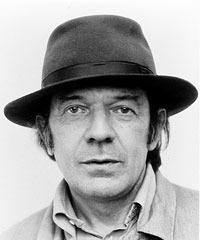
Gilles Deleuze
Gilles Deleuze was a French philosopher, writer, and critic, born on January 18, 1925, in Rodez, France. He is renowned for his groundbreaking work in metaphysics, epistemology, and aesthetics. Deleuze's philosophy is marked by its innovative concepts and ideas, which have had a significant impact on various disciplines, including literature, film, and the visual arts. He co-authored several books with Félix Guattari, such as 'Anti-Oedipus' and 'A Thousand Plateaus'. more
You May Also Like
“There are never just two choices. That is a lie to keep you from thinking too deeply.”
Source: Tess of the Road
Source: Emily Dickinson: Letters
“The statement 'I thought he was reaching for a gun' is a police officers license to kill.”
“As you write more and more personal it becomes more and more Universal”
Source: पार्टनर [Partner]
Source: Phenomenology of Perception
“An aware mind absent of thought is not thoughtlessness; it’s alert awareness.”
Source: The Unfinished Book About Who We Are