Quotessence
Home / Authors / Gilles Deleuze
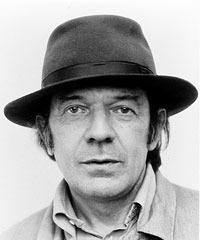
Gilles Deleuze

Gilles Deleuze Quotes

Philosopher

Filter quotes by topic

Famous Gilles Deleuze Quotes

“It is not by means of a metaphor that a banking or stock-market transaction, a claim, a coupon, a credit, is able to arouse people who are not necessarily bankers. And what about the effects of money that grows, money that produces more money? There are socioeconomic "complexes" that are also veritable complexes of the unconscious, and that communicate a voluptuous wave from the top to the bottom of their hierarchy (the military-industrial complex). And ideology, Oedipus, and the phallus have nothing to do with this, because they depend on it rather than being its impetus. For it is a matter of flows, of stocks, of breaks in and fluctuations of flows; desire is present wherever something flows and runs, carrying along with it interested subjects—but also drunken or slumbering subjects—toward lethal destinations.”

“Only emotion differs in nature from both intelligence and instinct, from both intelligent individual egoism and quasi-instinctive social pressure. Obviously no one denies that egoism produces emotions; and even more so social pressure, with all the fantasies of the story-telling function. But in both these cases, emotion is always connected to a representation on which it is supposed to depend. We are then placed in a composite of emotion and of representation, without noticing that it is potential, the nature of emotion as pure element. The latter in fact precedes all representation, itself generating new ideas. It does not have, strictly speaking, an object, but merely an essence that spreads itself over various objects, animals, plants and the whole of nature. "Imagine a piece of music which expresses love. It is not love for a particular person.... The quality of love will depend upon its essence and not upon its object." Although personal, it is not individual; transcendent, it is like the God in us. "When music cries, it is humanity, it is the whole of nature which cries with it. Truly speaking, it does not introduce these feelings in us; it introduces us rather into them, like the passers-by that might be nudged in a dance". In short, emotion is creative (first because it expresses the whole of creation, then because it creates the work in which it is expressed; and finally, because it communicates a little of this creativity to spectators or hearers).”

“The power of falsehood must be taken as far as a will to deceive, an artistic will which alone is capable of competing with the ascetic ideal and successfully opposing it. It is art which invents the lies that raise falsehood to this highest affirmative power, that turns the will to deceive into something which is affirmed in the power of falsehood. For the artist, appearance no longer means the negation of the real in this world but this kind of selection, correction, redoubling and affirmation. Then truth perhaps takes on a new sense.”

“Instead of linking an active life and an affirmative thinking, thought gives itself the task of judging life, opposing to it supposedly higher values, measuring it against these values, restricting and condemning it. And at the same time that thought thus becomes negative, life depreciates, ceases to be active, is reduced to its weakest forms, to sickly forms that are alone compatible with the so-caIled higher values. It is the triumph of "reaction" over active Iife and of negation over affirmative thought.”

“How many people today live in a language that is not their own? Or no longer, or not yet, even know their own and know poorly the major language that they are forced to serve? This is the problem of immigrants, and especially of their children, the problem of minorities, the problem of a minor literature but also a problem for all of us: how to tear a minor literature away from its own language, allowing it to challenge the language and making it follow a sober revolutionary path? How to become a nomad and an immigrant and a gypsy in relation to one's own language? Kafka answers: steal the baby from its crib, walk the tight rope.”

“Spațiile lui Riemann sunt lipsite de orice fel de omogenitate. Fiecare dintre ele se caracterizează prin forma expresiei care definește pătratul distanței dintre două puncte infinit învecinate. ... Rezultă de aici că doi observatori aflați învecinați pot să repereze într-un spațiu riemannian punctele care se află în imediata lor vecinătate, dar nu pot, fără stabilirea unei noi convenții, să se repereze unul față de celălalt. Fiecare vecinătate este deci ca o mică bucată de spațiu euclidian, dar racordarea dintre o vecinătate și următoarea nu e definită și poate fi făcută într-o infinitate de moduri. Spațiul riemannian cel mai general se prezintă, astfel, ca o colecție amorfă de bucăți juxtapuse fără a fi legate’ (Albert Lautmann, Les schèmas de structure, Hermann, 1938, pp.23, 34-35); această mulțime poate fi definită independent de orice referire la o metrică, prin condiții de frecvență sau, mai curând, de acumulare valabile pentru un ansamblu de vecinătăți, condiții total diferite de cele care determină spațiile metrice și tăieturile lor (chiar dacă un raport între cele două feluri de spațiu trebuie să decurgă de aici). Pe scurt, dacă urmăm frumoasa descriere a lui Lautmann, spațiul riemannian este un pur patchwork. Are conexiuni sau raporturi tactile. Are valori ritmice care nu se regăsesc în altă parte, chiar dacă pot fi traduse într-un spațiu metric. Eterogen, în variație continuă, este un spațiu neted, în măsura în care este amorf, nu omogen. (Gilles Deleuze et Félix Guattari)”

“The rite, the becoming-animal of the scapegoat clearly illustrates this: a first expiatory animal is sacrificed, but a second is driven away, sent out into the desert wilderness. In the signifying regime, the scapegoat represents a new form of increasing entropy in the system of signs: it is charged with everything that was "bad" in a given period, that is, everything that resisted signifying signs, everything that eluded the referral from sign to sign through the different circles; it also assumes everything that was unable to recharge the signifier as its center and carries off everything that spills beyond the outermost circle.”

“Le problème d'écrire : l'écrivain, comme dit Proust, invente dans la langue une nouvelle langue, une langue étrangère en quelque sorte. Il met à jour de nouvelles puissances grammaticales ou syntaxiques. Il entraîne la langue hors de ses sillons coutumiers, il la fait délirer. Mais aussi le problème d'écrire ne se sépare pas d'un problème de voir et d'entendre : en effet, quand une autre langue se crée dans la langue, c'est le langage tout entier qui tend vers une limite « asyntaxique », « agrammaticale », ou qui communique avec son propre dehors.”

“... acolo unde nu există aparat de stat și supramuncă, nu există nici model-Muncă. Există doar o variație continuă a acțiunii libere, trecând de la cuvânt la acțiune, de la o acțiune la alta, de la acțiune la cântec, de la cântec la cuvânt, de la cuvânt la întreprindere, într-un ciudat cromatism, cu momente de vârf sau de efort pe care observatorul extern nu poate decât să le ‘traducă’ în termeni de muncă, izbucnind intens și rar. E adevărat că întotdeauna s-a spus despre negri: ‘Nu muncesc, nu știu ce înseamnă munca.’ ... La fel de adevărat este că și indienii nici măcar nu înțelegeau despre ce este vorba, fiind total incapabili de vreun fel de organizare a muncii, chiar și sclavagistă: americanii nu vor fi importat atâția negri decât pentru că nu se puteau folosi de indieni, care preferau mai degrabă să moară. Anumiți etnologi remarcabili au pus o întrebare esențială. Au știut să întoarcă problema: societățile primitive nu sunt niște societăți de penurie sau de subzistență, dat fiindcă nu cunosc munca, ci, dimpotrivă, niște societăți ale acțiunii libere și ale spațiului neted, care nu au nicio nevoie de un factor-muncă , tot așa cum nici nu constituie stocuri. Aceste societăți nu sunt niște societăți ale lenei, chiar dacă diferența lor față de muncă poate să se exprime sub forma unui ‘drept la lene’. Și nu sunt niște societăți fără legi, chiar dacă diferența lor față de lege poate să se exprime sub aparența unei ‘anarhii’. Ele au mai curând legea nomos-ului, care reglează o variație continuă a activității, cu propria ei rigoare și propria ei cruzime (a te debarasa de ceea ce nu poți să transporți – batrâni sau copii...). (Gilles Deleuze et Félix Guattari)”

“Of course, Kafka doesn't see himself as a sort of party. He doesn't even pretend to be revolutionary, whatever his socialist sympathies may be. He knows that all the lines link him to a literary machine of expression for which he is simultaneously the gears, the mechanic, the operator, and the victim. So how will he proceed in this bachelor machine that doesn't make use of, and can't make use of, social critique? How will he make a revolution? He will act on the German language such as it is in Czechoslovakia. Since it is a deterritorialized language in many ways, he will push the deterritorialization farther, not through intensities, reversals and thickenings of the language but through a sobriety that makes language take flight on a straight line, anticipates or produces its segmentations. Expression must sweep up content; the same process must happen to form... It is not a politics of pessimism, nor a literary caricature or a form of science fiction.”

“Parnet: I want you to talk about desire. What is desire, exactly? Let's consider the question as simply as possible. When Anti-Oedipus... Deleuze: It's not what they thought it was, in any case, not what they thought it was, even back then. Even, I mean, the most charming people who were... It was a big ambiguity, it was a big misunderstanding, or rather a little one, a little misunderstanding. I believe that we wanted to say something very simple. In fact, we had an enormous ambition, notably when one writes a book, we thought that we would say something new, specifically that one way or another, people who wrote before us didn't understand what desire meant. That is, in undertaking our task as philosophers, we were hoping to propose a new concept of desire. But, regarding concepts, people who don't do philosophy mustn't think that they are so abstract... On the contrary, they refer to things that are extremely simple, extremely concrete, we'll see this later... There are no philosophical concepts that do not refer to non-philosophical coordinates. It's very simple, very concrete. What we wanted to express was the simplest thing in the world. We wanted to say: up until now, you speak abstractly about desire because you extract an object that's presumed to be the object of your desire. So, one could say, I desire a woman, I desire to leave on a trip, I desire this, that. And we were saying something really very simple, simple, simple: You never desire someone or something, you always desire an aggregate. It's not complicated. Our question was: what is the nature of relations between elements in order for there to be desire, for these elements to become desirable? I mean, I don't desire a woman - I'm ashamed to say things like that since Proust already said it, and it's beautiful in Proust: I don't desire a woman, I also desire a landscape that is enveloped in this woman, a landscape that, if needs be - I don't know - but that I can feel. As long as I haven't yet unfolded the landscape that envelops her, I will not be happy, that is, my desire will not have been attained, my desire will remain unsatisfied. I believe in an aggregate with two terms: woman/landscape, and it's something completely different. If a woman says, "I desire a dress," or "I desire (some) thing" or "(some) blouse," it's obvious that she does not desire this dress or that blouse in the abstract. She desires it in an entire context, a context of her own life that she is going to organize, the desire in relation not only with a landscape, but with people who are her friends, with people who are not her friends, with her profession, etc. I never desire some thing all by itself, I don't desire an aggregate either, I desire from within an aggregate.”

“Scriitorul este un vrăjitor pentru că a scrie este o devenire, pentru că actul de a scrie este traversat de niște stranii deveniri care nu sunt niște deveniri-scriitor, ci niște deveniri-șobolan, deveniri-insectă, deveniri-lup etc. ... Multe sinucideri de scriitori se explică tocmai prin astfel de participări contra naturii, prin astfel de nunți contra naturii. Scriitorul este un vrăjitor pentru că trăiește animalul ca pe singura populație față de care se simte responsabil de drept. ... îi creează incredibilul sentiment al unei Naturi necunoscute – afectul. Deoarece afectul nu este un sentiment personal sau un caracter, ci efectuarea unei puteri de haită care bulversează total eul, făcându-l să nu mai fie sigur de el însuși. Cine n-a cunoscut violența acestor secvențe animale care ne smulg din umanitate fie și doar pentru o clipă, facându-ne să ronțăim pâinea asemenea unei rozătoare... (Gilles Deleuze et Félix Guattari)”

“Producir, producto, una identidad producto-producir... Precisamente es esta identidad la que forma un tercer término en la serie lineal: un enorme objeto no diferenciado. Todo se detiene un momento, todo se paraliza (luego todo volverá a empezar). En cierta manera, sería mejor que nada marcharse, que nada funcionase. No haber nacido, salir de la rueda de los nacimientos; ni boca para mamar, ni ano para cagar. ¿Estarán las máquinas suficientemente estropeadas, sus piezas suficientemente sueltas como para entregarse y entregarnos a la nada? Se diría que los flujos de energía todavía están demasiado ligados, que los objetos todavía son demasiado orgánicos. Un puro fluido en estado libre y sin cortes, resbalando sobre un cuerpo lleno. Las máquinas deseantes nos forman un organismo; pero en el seno de esta producción, en su producción misma, el cuerpo sufre por ser organizado de este modo, por no tener otra organización, o por no tener ninguna organización. ‘Una parada incomprensible y por completo recta’ en medio del proceso, como tercer tiempo: ‘Ni boca. Ni lengua. Ni dientes. Ni laringe. Ni esófago. Ni vientre. Ni ano’.”

“When Nietzsche praises egoism it is always in an aggressive or polemical way, against the virtues, against the virtue of disinterestedness (Z III "Of the three evil things"). But in fact egoism is a bad interpretation of the will, just as atomism is a bad interpretation of force. In order for there to be egoism it is necessary for there to be an ego.”

“The law is not known, since there is nothing in it to know. We come across it only through its action, and it acts only through its sentence and its execution. It is not distinguishable from the application. We know it only through its imprint on our heart and our flesh: we are guilty, necessarily guilty. Guilt is like the moral thread which duplicates the thread of time.”

“I have no admiration for culture. I have no reserve knowledge, no provisional knowledge. And everything that I learn, I learn for a particular task, and once it's done, I immediately forget it, so that if ten years later, I have to get involved with something close to or directly within the same subject, I would have to start again from zero, with some few exceptions.”