Quotessence
Home / Quotes / Quote by Gilles Deleuze

Quote by Gilles Deleuze

Work

Anti-Oedipus: Capitalism and Schizophrenia

Browse quotes and source details for this work. more

Author
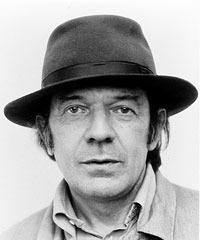
Gilles Deleuze
Gilles Deleuze

Gilles Deleuze was a French philosopher, writer, and critic, born on January 18, 1925, in Rodez, France. He is renowned for his groundbreaking work in metaphysics, epistemology, and aesthetics. Deleuze's philosophy is marked by its innovative concepts and ideas, which have had a significant impact on various disciplines, including literature, film, and the visual arts. He co-authored several books with Félix Guattari, such as 'Anti-Oedipus' and 'A Thousand Plateaus'. more

You May Also Like

“Низка людей, які працюють у цій галузі, починаючи з таких постструктуралістів, як Лакан і Дерріда, писали в такий спосіб, який, здавалося, навмисне затуманював їхні думки й захищав від відповідальності за суперечності і слабку логіку.”

“El sueño del vuelo espacial seguía gestándose mi mente y en muchas noches de introspección juvenil, antes de conciliar el sueño, me repetía a mí mismo que hasta ahora no había descubierto nada que me demostrara que mi meta me sería imposible. Por el momento, debía seguir viviendo mi vida presente. En cierto modo, mi entrenamiento ya había comenzado.”

“Even in the early phases of tenant reduction, during the seventeenth century, many of the dispossessed appear to have maintained a foothold in the local area, often by turning to spinning and other activity associated with sheep farming - a more formal division of production and gendering of the working population. However, by the 1710s, the decade when the Buccleuchs began efforts to rationalise their 'South Country' operations, as many as two thirds of the Ettrick and Yarrow valley farms were under a single tenancy. By the 1790s, it was nine in ten. It is across this period that widespread dispossession seems to have turned into widespread clearance across the Southern Uplands in general, and Ettrick and Yarrow in particular. Tenants compelled to flit at the end of a tack would take with them wives, children, elderly relatives and unrelated servants, each removal amounting to a substantial dent to the population.”

“Cashel has been here before. Once part of the Rowardennan Estate, it was purchased by the National Land Fund for public benefit and passed to the Forestry Commission to manage before being sold by the Thatcher government. The cycle is now being repeated: private, public, private, public, private. What is land for? The Cashel Trustees are now proposing to retain a core woodland are but have not said who or what the land is for. How about using the land to demonstrate what support is needed from government if native woodland is to deliver public benefit?”