“Parnet: I want you to talk about desire. What is desire, exactly? Let's consider the question as simply as possible. When Anti-Oedipus... Deleuze: It's not what they thought it was, in any case, not what they thought it was, even back then. Even, I mean, the most charming people who were... It was a big ambiguity, it was a big misunderstanding, or rather a little one, a little misunderstanding. I believe that we wanted to say something very simple. In fact, we had an enormous ambition, notably when one writes a book, we thought that we would say something new, specifically that one way or another, people who wrote before us didn't understand what desire meant. That is, in undertaking our task as philosophers, we were hoping to propose a new concept of desire. But, regarding concepts, people who don't do philosophy mustn't think that they are so abstract... On the contrary, they refer to things that are extremely simple, extremely concrete, we'll see this later... There are no philosophical concepts that do not refer to non-philosophical coordinates. It's very simple, very concrete. What we wanted to express was the simplest thing in the world. We wanted to say: up until now, you speak abstractly about desire because you extract an object that's presumed to be the object of your desire. So, one could say, I desire a woman, I desire to leave on a trip, I desire this, that. And we were saying something really very simple, simple, simple: You never desire someone or something, you always desire an aggregate. It's not complicated. Our question was: what is the nature of relations between elements in order for there to be desire, for these elements to become desirable? I mean, I don't desire a woman - I'm ashamed to say things like that since Proust already said it, and it's beautiful in Proust: I don't desire a woman, I also desire a landscape that is enveloped in this woman, a landscape that, if needs be - I don't know - but that I can feel. As long as I haven't yet unfolded the landscape that envelops her, I will not be happy, that is, my desire will not have been attained, my desire will remain unsatisfied. I believe in an aggregate with two terms: woman/landscape, and it's something completely different. If a woman says, "I desire a dress," or "I desire (some) thing" or "(some) blouse," it's obvious that she does not desire this dress or that blouse in the abstract. She desires it in an entire context, a context of her own life that she is going to organize, the desire in relation not only with a landscape, but with people who are her friends, with people who are not her friends, with her profession, etc. I never desire some thing all by itself, I don't desire an aggregate either, I desire from within an aggregate.”
Quote by Gilles Deleuze
Author
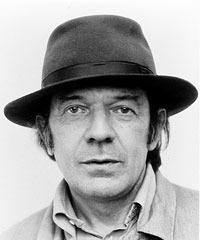
Gilles Deleuze
Gilles Deleuze was a French philosopher, writer, and critic, born on January 18, 1925, in Rodez, France. He is renowned for his groundbreaking work in metaphysics, epistemology, and aesthetics. Deleuze's philosophy is marked by its innovative concepts and ideas, which have had a significant impact on various disciplines, including literature, film, and the visual arts. He co-authored several books with Félix Guattari, such as 'Anti-Oedipus' and 'A Thousand Plateaus'. more
You May Also Like
“Music eats its young and gives birth to a new hybrid creature.”
Source: The Infallible Word of God: 365 Inspirational Quotes
Source: The Monsters and the Critics and Other Essays
Source: You
Source: The Haunted Baronet