“The power of falsehood must be taken as far as a will to deceive, an artistic will which alone is capable of competing with the ascetic ideal and successfully opposing it. It is art which invents the lies that raise falsehood to this highest affirmative power, that turns the will to deceive into something which is affirmed in the power of falsehood. For the artist, appearance no longer means the negation of the real in this world but this kind of selection, correction, redoubling and affirmation. Then truth perhaps takes on a new sense.”
Quote by Gilles Deleuze
Work
Nietzsche and Philosophy
This book delves into the complex and influential philosophical concepts developed by the German philosopher Friedrich Nietzsche, analyzing his work and its impact on modern thought. more
Author
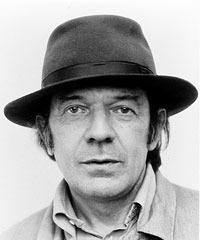
Gilles Deleuze
Gilles Deleuze was a French philosopher, writer, and critic, born on January 18, 1925, in Rodez, France. He is renowned for his groundbreaking work in metaphysics, epistemology, and aesthetics. Deleuze's philosophy is marked by its innovative concepts and ideas, which have had a significant impact on various disciplines, including literature, film, and the visual arts. He co-authored several books with Félix Guattari, such as 'Anti-Oedipus' and 'A Thousand Plateaus'. more
You May Also Like
Source: The Hunchback of Notre-Dame
“Enjoy yourself too much rather than too little, and don’t take art or love too seriously.”
Source: Baroque Visual Rhetoric
Source: Morris
Source: Mademoiselle Chanel
Source: Mademoiselle Chanel
Source: Baroque Visual Rhetoric
Source: What Is Art?
Source: The List / Yellowface