Quotessence
Home / Quotes / Quote by Alan Furst

Quote by Alan Furst

“But nothing here was what it seemed. Even the grey stone of the buildings hid within itself a score of secret tints, to be revealed only by one momentary strand of light. At first, the tide of secrecy that rippled through the streets had made him tense and watchful, but in time he realised that in a city of clandestine passions, everyone was a spy.”

Quote by Alan Furst

Work

Night Soldiers

Browse quotes and source details for this work. more

Author

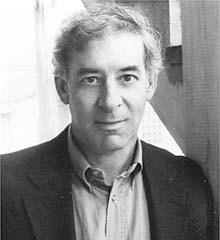
Alan Furst
Alan Furst

Alan Furst, born on February 20, 1941, is a renowned American author known for his works that delve into the history and culture of Europe in the 20th century, particularly through the genre of spy novels. more

You May Also Like

“Everything is going according to plan in this strategically fathomed notion of "country" where the population wholeheartedly believes in that fabled myth known as democracy. The corporations that profit from our endless war campaigns, who have a multifarious number of politicians at the top of their covert letterheads and on payroll always get what they pay for - a route to even more of our tax dollars. The status quo doesn't change with the election of any given politician, whether it be in the Senate, the Congress, or even the White House. This nation (i.e. notion) is, in and of itself, nothing but an ingeniously designed corporation that uses you and I to further perpetuate the myth of country, the myth of united, the myth of democracy, and the myth of patriotism. We have long passed the point where we the people sat on the tongue of this monstrosity. We now reside in the belly of the beast.”

“In actual fact, conventions are the death of real tradition as they are of all real life. They are parasites which attach themselves to the living organism of tradition and devour all its reality, turning it into a hollow formality. Tradition is living and active, but convention is passive and dead. Tradition does not form us automatically: we have to work to understand it. Convention is accepted passively, as a matter of routine. Therefore, convention easily becomes an evasion of reality. It offers us only pretended ways of solving the problems of living - a system of gestures and formalities. Tradition really teaches us to live and shows us how to take full responsibility for our own lives. Thus tradition is often flatly opposed to what is ordinary, to what is mere routine. But convention, which is a mere repetition of familiar routines, follows the line of least resistance. One goes through an act, without trying to understand the meaning of it all, merely because everyone else does the same. Tradition, which is always old, is at the same time ever new because it is always reviving - born again in each new generation, to be lived and applied in a new and particular way. Convention is simply the ossification of social customs. The activities of conventional people are merely excuses for NOT acting in a more integrally human way. Tradition nourishes the life of the spirit; convention merely disguises its interior decay.”

“Once she wasn't supposed to like it. To have her in a position she didn't like, that was power. Even if she liked it she had to pretend she didn't. Then she was supposed to like it. To make her do something she didn't like and then make her like it, that was greater power. The greatest power of all is when she doesn't really like it but she's supposed to like it, so she has to pretend.”

“Our mother tongue, so far ahead of me, Displays her goods, hints at each bond and link, Provides the means, leaves it to us to think, Proffers the possibles, balanced mutually, To be used or not, as our designs elect, To be tried out, taken up or in or on, Scrapped or transformed past recognition, Though she sustains, she’s too wise to direct. Ineffably regenerative, how does she know So much more than we can? How hold such store For our recovery, for what must come before Our instauration, that future we will owe To what? To whom? To countless of our kind, Who, tending meanings, grew Man’s unknown Mind.”