“On Friday the 13th of April 2029, an asteroid large enough to fill the Rose Bowl as though it were an egg cup, will fly so close to Earth, that it will dip below the altitude of our communication satellites. We did not name this asteroid Bambi. Instead, it's named Apophis, after the Egyptian god of darkness and death. If the trajectory of Apophis at close approach passes within a narrow range of altitudes called the 'keyhole,' the precise influence of Earth's gravity on its orbit will guarantee that seven years later in 2036, on its next time around, the asteroid will hit Earth directly, slamming in the Pacific Ocean between California and Hawaii. The tsunami it creates will wipe out the entire west coast of North America, bury Hawaii, and devastate all the land masses of the Pacific Rim. If Apophis misses the keyhole in 2029, then, of course, we have nothing to worry about in 2036.”
Quote by Neil deGrasse Tyson
Author
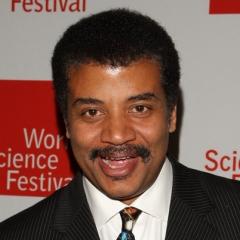
Neil deGrasse Tyson is an American astrophysicist, science communicator, and television personality. Born on October 5, 1958, he is renowned for his deep understanding of the cosmos and his ability to popularize scientific knowledge. Tyson grew up in New York City and earned a Ph.D. in astronomy from Columbia University. He served as the director of the Hayden Planetarium at the American Museum of Natural History and has been a member of various scientific committees. more
You May Also Like
“History teaches us many things. Most importantly, the things that made us who and what we are.”
“It rolls the mid-most waters of the world, the Indian Ocean and Atlantic being just its arms.”
“A convergence exists in the search for human excellence on both sides of the Pacific Ocean.”