“What the turbulent months of the campaign and the election revealed most of all, I think, was that the American people were voicing a profound demand for change. On the one hand, the Humphrey people were demanding a Marshall Plan for our diseased cities and an economic solution to our social problems. The Nixon and Wallace supporters, on the other hand, were making their own limited demands for change. They wanted more "law and order," to be achieved not through federal spending but through police, Mace, and the National Guard. We must recognize and accept the demand for change, but now we must struggle to give it a progressive direction. For the immediate agenda, I would make four proposals. First, the Electoral College should be eliminated. It is archaic, undemocratic, and potentially very dangerous. Had Nixon not achieved a majority of the electoral votes, Wallace might have been in the position to choose and influence our next President. A shift of only 46,000 votes in the states of Alaska, Delaware, New Jersey, and Missouri would have brought us to that impasse. We should do away with this system, which can give a minority and reactionary candidate so much power and replace it with one that provides for the popular election of the President. It is to be hoped that a reform bill to this effect will emerge from the hearings that will soon be conducted by Senator Birch Bayh of Indiana. Second, a simplified national registration law should be passed that provides for universal permanent registration and an end to residence requirements. Our present system discriminates against the poor who are always underregistered, often because they must frequently relocate their residence, either in search of better employment and living conditions or as a result of such poorly planned programs as urban renewal (which has been called Negro removal). Third, the cost of the presidential campaigns should come from the public treasury and not from private individuals. Nixon, who had the backing of wealthy corporate executives, spent $21 million on his campaign. Humphrey's expenditures totaled only $9.7 million. A system so heavily biased in favor of the rich cannot rightly be called democratic. And finally, we must maintain order in our public meetings. It was disgraceful that each candidate, for both the presidency and the vice-presidency, had to be surrounded by cordons of police in order to address an audience. And even then, hecklers were able to drown him out. There is no possibility for rational discourse, a prerequisite for democracy, under such conditions. If we are to have civility in our civil life, we must not permit a minority to disrupt our public gatherings.”
Quote by Bayard Rustin
Work
Browse quotes and source details for this work. more
Author
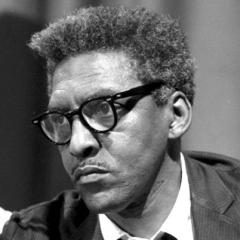
Bayard Rustin was a prominent African American civil rights activist who played a significant role in the American civil rights movement. He was a strategist and advisor to many civil rights leaders, including Martin Luther King Jr. Rustin was a key figure in the organization of the 1963 March on Washington for Jobs and Freedom, one of the largest political protests in U.S. history. He was also a leader in the gay rights movement and advocated for nonviolent protest and civil disobedience. more
You May Also Like
“If you want meaning for your brand or company, dare to embrace conflict”
“You are loved in every part of who you are.”
“Watch the book trailer on You Tube /TheFabulousBookwormzillas”
“I view politicians as representatives of the corporations that fund their election campaigns.”