Quotessence
Home / Quotes / Quote by Friedrich Nietzsche

Quote by Friedrich Nietzsche

“There is a point in the history of society when it becomes so pathologically soft and tender that among other things it sides even with those who harm it, criminals, and does this quite seriously and honestly. Punishing somehow seems unfair to it, and it is certain that imagining "punishment" and "being supposed to punish" hurts it, arouses fear in it. "Is it not enough to render him undangerous? Why still punish? Punishing itself is terrible." With this question, herd morality, the morality of timidity, draws its ultimate consequence.”

Quote by Friedrich Nietzsche

Work

Beyond Good and Evil

This book delves into the complexities of moral philosophy, questioning conventional moral values and advocating for a more nuanced understanding of human nature and societal norms. more

Author

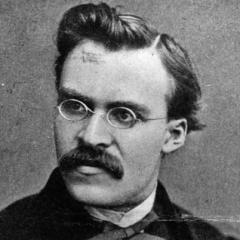
Friedrich Nietzsche
Friedrich Nietzsche

Friedrich Nietzsche was a German philosopher, cultural critic, poet, and writer whose works have had a profound impact on subsequent philosophy, literature, and thought. His ideas revolve around concepts such as the 'will to power', the 'Übermensch', and the 'eternal recurrence'. more

You May Also Like

“To say that straight men are heterosexual is only to say that they engage in sex (fucking exclusively with the other sex, i.e., women). All or almost all of that which pertains to love, most straight men reserve exclusively for other men. The people whom they admire, respect, adore, revere, honor, whom they imitate, idolize, and form profound attachments to, whom they are willing to teach and from whom they are willing to learn, and whose respect, admiration, recognition, honor, reverence and love they desire… those are, overwhelmingly, other men. In their relations with women, what passes for respect is kindness, generosity or paternalism; what passes for honor is removal to the pedestal. From women they want devotion, service and sex. Heterosexual male culture is homoerotic; it is man-loving.”

“There is no word that admits of more various significations, and has made more varied impressions on the human mind, than that of liberty.” (Montesquieu) In order to exist, liberty and justice in a society, there should be equality in this society before them and together with them. Only then can we speak of humanism. Only socially equal personalities are free. And only free and equal in rights personalities could “love each other like brothers.”

“We seldom realize, for example, that our most private thoughts and emotions are not actually our own. For we think in terms of languages and images which we did not invent, but which were given to us by our society. We copy emotional reactions from our parents, learning from them thatexcrement is supposed to have a disgusting smell and that vomiting is supposed to be an unpleasant sensation. The dread of death is also learned from their anxieties about sickness and from their attitudes to funerals and corpses. Our social environment has this power just because we do not exist apart from a society. Society is our extended mind and body. Yet the very society from which the individual is inseparable is using its whole irresistible force to persuade the individual that he is indeed separate! Society as we now know it is therefore playing a game with self-contradictory rules.”

“Unjust laws exist; shall we be content to obey them, or shall we endeavor to amend them, and obey them until we have succeeded, or shall we transgress them at once? Men generally, under such a government as this, think that they ought to wait until they have persuaded the majority to alter them. They think that, if they should resist, the remedy would be worse than the evil. But it is the fault of the government itself that the remedy is worse than the evil. It makes it worse. Why is it not more apt to anticipate and provide for reform? Why does it not cherish its wise minority? Why does it cry and resist before it is hurt? Why does it not encourage its citizens to be on the alert to point out its faults, and do better than it would have them?”