Quotessence
Home / Quotes / Quote by Allen Ginsberg

Quote by Allen Ginsberg

“Millions of fathers in rain Millions of mothers in pain Millions of brothers in woe Millions of sisters nowhere to go Millions of daughters walk in the mud Millions of children wash in the flood A million girls vomit and groan Millions of families hopeless alone”

Quote by Allen Ginsberg

Book:Poems

Work

Poems

This book is a compilation of poems that explore a wide range of subjects and emotions, showcasing the beauty and depth of the poetic form. more

Author

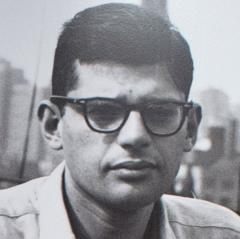
Allen Ginsberg
Allen Ginsberg

Allen Ginsberg, born on June 3, 1926, was an influential American poet. Known for his free-form poetry and profound political and social commentary, he was one of the key figures of the Beat Generation. Ginsberg's landmark poem 'Howl' was first published in 1956, becoming a milestone in American literary history. more

You May Also Like

“Europeans the Poles or Balts coming in here … we brought here knowledge with us and our culture with us, but we assimilated … assimilated is not one way, it’s a two-way street. - Fred Ritzkowski, German”

“From a safe distance, the man sat watching, thinking what a bunch of fools! Is this how Americans live? Walking around blindly, bumbling into each other and falling down all the time? But he hadn’t noticed what the Professor had noticed or he wouldn’t have been thinking in such arrogant terms. Before the Professor righted himself, he had caught sight of a partially concealed, but plainly present M1942 Sosso Pistol, an Italian made handgun.”

“A skillful literary artist has constructed a tale. If wise, he has not fashioned his thoughts to accommodate his incidents; but having conceived, with deliberate care, a certain unique or single effect to be wrought out, he then invents as may best aid him in establishing this preconceived effect. If his very initial sentence tend not to the outbringing of this effect, then he has failed in his first step. In the whole composition there should be no words written, of which the tendency, direct or indirect, is not to the one pre-established design. And by such means, with such care and skill, a picture is at length painted which leaves in the mind of him who contemplates it with a kindred art, a sense of the fullest satisfaction. The idea of the tale has been presented unblemished because undisturbed: and this is an end unattainable by the novel. Undue brevity is just as exceptionable here as in the poem; but undue length is yet more to be avoided.”

“What do you say to a warmongering emperor who has conquered many worlds and displaced thousands of refugees from their homes in the process? Refugees that sought asylum on Uhna. “It’s uh . . .” I pause. I can’t say it’s an honor to meet him when he arrived at my world prepared to blast the corruption away with his armada, along with anyone who happened to be in his way. I focus on his positive traits and say, “You have a nice beard! It looks well established. May I call you Caderyn?” Caderyn scoffs. “No.”

“What passing bells for these who die as cattle? Only the monstrous anger of the guns. Only the stuttering rifle's rapid rattle Can patter out their hasty orisons. No mockeries now for them; no prayers, nor bells, Nor any voice of mourning save the choirs, The shrill demented choirs of wailing shells, And bugles calling for them from sad shires. What candles may be held to speed them all? Not in the hands of boys, but in their eyes, Shall shine the holy glimmers of goodbyes. The pallor of girls' brows shall be their pall, Their flowers the tenderness of patient minds, And each, slow dusk a drawing down of blinds.”