Quotessence
Home / Quotes / Quote by Edward Fitzgerald

Quote by Edward Fitzgerald

“Tis all a Checkerboard of Nights and Days Where Destiny with Men for Pieces plays: Hither and thither moves, and mates, and stays, And one by one back in the Closet lays.”

Quote by Edward Fitzgerald

Author
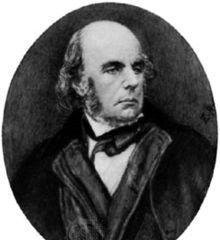
Edward Fitzgerald
Edward Fitzgerald

Edward Fitzgerald was a renowned British poet, best known for his translation of 'The Rubáiyát of Omar Khayyám'. His poetry style was unique, deeply influenced by Romanticism, and characterized by profound philosophy and rich imagination. more

You May Also Like

“A skillful literary artist has constructed a tale. If wise, he has not fashioned his thoughts to accommodate his incidents; but having conceived, with deliberate care, a certain unique or single effect to be wrought out, he then invents as may best aid him in establishing this preconceived effect. If his very initial sentence tend not to the outbringing of this effect, then he has failed in his first step. In the whole composition there should be no words written, of which the tendency, direct or indirect, is not to the one pre-established design. And by such means, with such care and skill, a picture is at length painted which leaves in the mind of him who contemplates it with a kindred art, a sense of the fullest satisfaction. The idea of the tale has been presented unblemished because undisturbed: and this is an end unattainable by the novel. Undue brevity is just as exceptionable here as in the poem; but undue length is yet more to be avoided.”

“What do you say to a warmongering emperor who has conquered many worlds and displaced thousands of refugees from their homes in the process? Refugees that sought asylum on Uhna. “It’s uh . . .” I pause. I can’t say it’s an honor to meet him when he arrived at my world prepared to blast the corruption away with his armada, along with anyone who happened to be in his way. I focus on his positive traits and say, “You have a nice beard! It looks well established. May I call you Caderyn?” Caderyn scoffs. “No.”

“What passing bells for these who die as cattle? Only the monstrous anger of the guns. Only the stuttering rifle's rapid rattle Can patter out their hasty orisons. No mockeries now for them; no prayers, nor bells, Nor any voice of mourning save the choirs, The shrill demented choirs of wailing shells, And bugles calling for them from sad shires. What candles may be held to speed them all? Not in the hands of boys, but in their eyes, Shall shine the holy glimmers of goodbyes. The pallor of girls' brows shall be their pall, Their flowers the tenderness of patient minds, And each, slow dusk a drawing down of blinds.”

“I lie down on many a station platform; I stand before many a soup kitchen; I squat on many a bench;--then at last the landscape becomes disturbing, mysterious, and familiar. It glides past the western windows with its villages, their thatched roofs like caps, pulled over the white-washed, half-timbered houses, its corn-fields, gleaming like mother-of-pearl in the slanting light, its orchards, its barns and old lime trees. The names of the stations begin to take on meaning and my heart trembles. The train stamps and stamps onward. I stand at the window and hold on to the frame. These names mark the boundaries of my youth.”

“It is your duty,' he said, 'to recover your country not by gold but by the sword. You will be fighting with all you love before your eyes: the temples of the gods, your wives and children, the soil of your native land scarred with the ravages of war, and everything which honor and truth call upon you to defend, or recover, or avenge.”