Quotessence
Home / Quotes / Quote by Marie Curie

Quote by Marie Curie

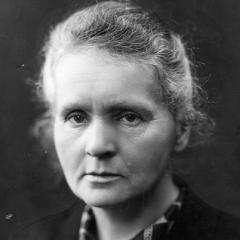
“Os físicos publicam sempre na íntegra os resultados das investigações feitas. Se a nossa descoberta é suscetível de futuro comercial, isso é obra do acaso e não nos deve interessar. Além de que o rádio vai servir para a cura de doentes… Parece-me errado procurar auferir vantagens. Seria contrário ao espírito científico.”

Quote by Marie Curie

Work

Autobiografia

Browse quotes and source details for this work. more

Author

Marie Curie
Marie Curie

Marie Curie was an outstanding physicist known for her pioneering work in the field of radioactivity. She discovered polonium and radium, for which she was awarded two Nobel Prizes. Madame Curie was the first woman to win a Nobel Prize and the only person to win in two different scientific fields. more

You May Also Like

“The lack of understanding and some consensus about the question of God shows the fanaticism of both religious people and atheists who have become atheists more because of hate toward religion than because of “hatred” toward God. Therefore, they cannot understand the difference between God and religion. Curt Gödel (1906—1978) noted, '[I am] against religions but not against religion.' Without intermediaries and 'holy books,' real religion is the desire to reconnect (religio) to the Ultimate Source.”

“Greek atomists Leucippus, his pupil Democritus, and other metaphysicians knew that the world was not how people saw and perceived it. If they understood atoms even then, the indivisible particles, not modern new atoms, we must believe that they understood much more. If they knew that every sense and sensation is a convention, they could have understood that space and time are conventions, too. Regardless of not thoroughly understanding or elaborating on these concepts, they understood that the world must be something different from what is experienced by the senses or how the senses understand it. If Everything is by a convention of senses, then senses can represent things differently; that is why the eye watches, not the ear. If Everything is a convention, then Everything we experience by senses must be relative.”

“Maybe Democritus did not understand that matter, as a convention or the world of atoms that makes the whole Universe, including our brain, which “rules” the senses and cognition, is the same convention. However, an atom is a convention. The World is a Convention of the Absolute. The conventions must be relative; only the Absolute is unconventional, but only by and through conventions are the world and life possible.”

“One has to grow old to understand the functioning of science. Then one may remember the papers which a long time ago aroused great interest and one may compare them to the present-day textbooks. [...] History becomes smooth, too smooth in writing. Right starts are forgotten, wrong expeditions into the desert disappear without a trace. Only a few papers will be cited.”

“The poetry underlying science comes from its inevitable human imperfections. Science is a messy process of discovery, revision, and (at its best) enlightenment. It is like a complex tapestry that is being woven on one end while being torn apart at other ends, all with threads that we are learning to spin from raw materials on the fly.”

“Absolute” velocity happens when the primary quality of all existence or the Universal Mind shows its power in action, being everywhere simultaneously, not only faster than the speed of light but at the absolute speed, that means omnipresence. On this level, time is absolute, and there is no relativity. Relativity of time is possible within the “visible” realm of reality and not in the manifestation (action) of the primary quality of a Universal Mind, which functions within the realm of Zero, securing omnipresence in the always-present time. Relativity of time is possible only if there are the past and the future, not the present. The present is Zero, and Zero is absolute.”

“People associate science with absolutes that are immutable, when in fact science is a process that continually uncovers new information. As new information evolves, the process of science allows for self-correction. The biological or health sciences are different from the physical sciences and mathematics. With mathematics, two plus two equals four today, and two plus two will equal four a thousand years from now. Not so with the biological sciences, where what we know continues to evolve and uncertainty is common. This uncertainty is magnified in the context of a deadly pandemic when there is already anxiety and suffering. With COVID, our understanding of transmissibility, severity, vulnerability of different people, and level of protection, to name a few, continually evolved, and our medical advice had to change to reflect this. This is exactly what happened in early March with the question of whether to wear masks and how effective they were.”