Quotessence
Home / Quotes / Quote by Albert Camus

Quote by Albert Camus

Work

Notebooks 1935-1942

Browse quotes and source details for this work. more
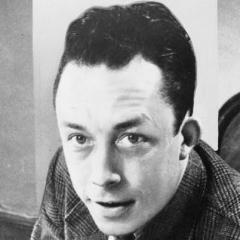
Author

Albert Camus
Albert Camus

Albert Camus was a French author and philosopher, born on November 7, 1913, and died on January 4, 1960. Known for his unique existentialist philosophy and profound insights into human suffering, Camus' works include 'The Stranger', 'The Plague', and 'The Myth of Sisyphus', which have had a profound impact on 20th-century literature. more

You May Also Like

“Was it wisdom? Was it knowledge? Was it, once more, the deceptiveness of beauty, so that all one’s perceptions, half-way to truth, were tangled in a golden mesh? Or did she lock up within her some secret which certainly Lily Briscoe believed people must have for the world to go on at all? Every one could not be as helter skelter, hand to mouth as she was. But if they knew, could they tell one what they knew? Sitting on the floor with her arms round Mrs. Ramsay’s knees, close as she could get, smiling to think that Mrs. Ramsay would never know the reason of that pressure, she imagined how in the chambers of the mind and heart of the woman who was, physically, touching her, were stood, like the treasures in the tombs of kings, tablets bearing sacred inscriptions, which if one could spell them out, would teach one everything, but they would never be offered openly, never made public. What art was there, known to love or cunning, by which one pressed through into those secret chambers? What device for becoming, like waters poured into one jar, inextricably the same, one with the object one adored? Could the body achieve, or the mind, subtly mingling in the intricate passages of the brain? or the heart? Could loving, as people called it, make her and Mrs. Ramsay one? for it was not knowledge but unity that she desired, not inscriptions on tablets, nothing that could be written in any language known to men, but intimacy itself, which is knowledge, she had thought, leaning her head on Mrs. Ramsay’s knee.”

“Somewhere, deep within me, beyond the passion, beyond the beauty of the night, that little spark of Daily magic ignited in me again, began burning in a place that had gone dark and untended, that had yearned to be bright and warm. I felt it now, something old, something new, something complete. Perhaps it had been in there in me all along, the belief that there is a plan and a purpose, that God whispers into every life, some things that are beyond the scope of the mind, and can only be felt with the heart and the spirit. Those dreams, the dreams that are dreamed *for* us, not by us, are the truest of all.”

“You must go further than I did," Nedra said. "You know that." "Further?" "With your life. You must become free." She did not explain it; she could not. It was not a matter of living alone, though in her case this had been necessary. The freedom she meant was self-conquest. It was not a natural state. It was meant only for those who would risk everything for it, who were aware that without it life is only appetites until the teeth are gone.”