Quotessence
Home / Quotes / Quote by Sarah J. Maas

Quote by Sarah J. Maas

“So, who won the fight?' Cassian asked the next morning as she sat on her rock and watched him go through his exercises. He hadn't asked at breakfast about the black eye and cut chin or how stiffly she'd moved. Neither had Mor upon her arrival. That the bruising and cuts remained at all told Nesta how bad the fall had been, but as High Fae, with her improved healing, they were already on the mend. ... 'What fight?' She examined her mangled nails. Even with the... whatever it was she'd flung out to catch herself, her nails had cracked. She didn't let herself name what had come from within her, didn't let herself acknowledge it. By dawn, it had been strangled into submission. 'The one between you and the stairs.' Nesta cut him a glare. 'I don't know what you're talking about.' Cassian began moving once more, drawing his sword and running through a series of movements that all seemed designed to hack a person in two. 'You know: three in the morning, you leave your room to get shit-faced drunk in town, and you're in such a rush to conquer the steps that you fall down a good thirty of them before you can stop yourself.' Had he seen the step? The handprint? She demanded. 'How do you know that?' He shrugged. 'Are you watching me?' Before he could answer, she spat. 'You were watching and didn't come to help?' Cassian shrugged again. 'You stopped falling. If you'd kept at it, someone would have eventually come to catch you before you hit the bottom.' She hissed at him. He only grinned and beckoned with a hand. 'Want to join me?' 'I should push you down those stairs.' ... 'Well?' he demanded, an edge creeping into his voice. 'If you've got those glorious bruises, you might as well claim it came from training and not a pathetic tumble.”

Quote by Sarah J. Maas

Work

A ​Court of Silver Flames

Browse quotes and source details for this work. more

Author
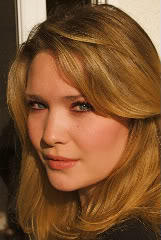
Sarah J. Maas
Sarah J. Maas

Sarah J. Maas is an American author known for her fantasy novels. Her works are celebrated for their rich imagination, complex characters, and gripping plots. Born on March 5, 1986, Maas has developed a passion for writing from a young age and has become a successful author in her own right. more

You May Also Like

“Moony and the jitterbugs swayed and staggered, trying to keep their balance while ducking to avoid an incoming snowman figure. "This ain't what we signed up for, Cuz," said the bug playing the upright bass. "That's right. Keep y'all's money. We quit." This bug threw down his pipe and jumped into the water. The rest of his band abandoned their instruments and made a break for it too. They swam for the nearest gravey boat.”

“Contemporary writers use animal-transformation themes to explore issues of gender, sexuality, race, culture, and the process of transformation...just as storytellers have done, all over the world, for many centuries past. One distinct change marks modern retellings, however, reflecting our changed relationship to animals and nature. In a society in which most of us will never encounter true danger in the woods, the big white bear who comes knocking at the door [in fairy tales] is not such a frightening prospective husband now; instead, he's exotic, almost appealing. Whereas once wilderness was threatening to civilization, now it's been tamed and cultivated; the dangers of the animal world have a nostalgic quality, removed as they are from our daily existence. This removal gives "the wild" a different kind of power; it's something we long for rather than fear. The shape-shifter, the were-creature, the stag-headed god from the heart of the woods--they come from a place we'd almost forgotten: the untracked forests of the past; the primeval forests of the mythic imagination; the forests of our childhood fantasies: untouched, unspoiled, limitless. Likewise, tales of Animal Brides and Bridegrooms are steeped in an ancient magic and yet powerfully relevant to our lives today. They remind us of the wild within us...and also within our lovers and spouses, the part of them we can never quite know. They represent the Others who live beside us--cat and mouse and coyote and owl--and the Others who live only in the dreams and nightmares of our imaginations. For thousands of years, their tales have emerged from the place where we draw the boundary lines between animals and human beings, the natural world and civilization, women and men, magic and illusion, fiction and the lives we live.”

“These mysterious and unaccountable incidents by degrees impressed the minds of the inhabitants with terror that cannot be described; no woman or boy would go out of doors after sunset, on any account whatever, and there was scarcely a man who dust venture forth alone after the fall of evening. If they could have been sure that brownies and fairies had only power to assume the human shape, they would not have been nearly such peril and perplexity; but there was no form of any thing animate or inanimate, save that of a lamb, that they were sure of; they were of course waylaid at every turn, and kept in continual agitation.”