Quotessence
Home / Quotes / Quote by Billie Burke

Quote by Billie Burke

Author

Billie Burke
Billie Burke

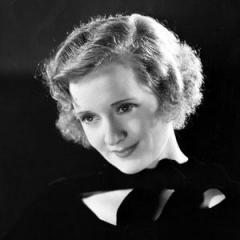
Billie Burke (August 7, 1884 – May 14, 1970) was an American actress best known for playing Glinda the Good Witch in the 1939 film The Wizard of Oz. Born in Washington, D.C., she moved to England as a child and began her stage career in London. Returning to the U.S. in 1907, she became a major Broadway star. She transitioned to film in the 1910s and appeared in over 70 movies. Known for her elegant demeanor, distinctive voice, and comedic talent, Burke left a lasting legacy in both theater and cinema. She also wrote two autobiographies and was involved in charitable work. She died in Los Angeles at age 85. more

You May Also Like

“[O]ne has to have endured a few decades before wanting, let alone needing, to embark on the project of recovering lost life. And I think it may be possible to review 'the chronicles of wasted time.' William Morris wrote in The Dream of John Ball that men fight for things and then lose the battle, only to win it again in a shape and form that they had not expected, and then be compelled again to defend it under another name. We are all of us very good at self-persuasion and I strive to be alert to its traps, but a version of what Hegel called 'the cunning of history' is a parallel commentary that I fight to keep alive in my mind.”

“But there was a time when each of us stood naked before the world, confronting life as a serious problem with which we were intimately and passionately concerned. There was a time when it was of vital interest to us to find out whether there was a God or not. Obviously the existence or otherwise of a future life must be of the very first importance to somebody who is going to live her present one, because her manner of living it must hinge on the problem. There was a time when Free Love versus Catholic Morality was a question of as much importance to our hot bodies as if a pistol had been clapped to our heads. Further back, there were times when we wondered with all our souls what the world was, what love was, what we were ourselves.”

“I think as you get older you become more of who you always were. You become a more concentrated version of yourself. You really learn who you are, why you're unique, who you've always been [...] There's a winnowing away of nonessentials, sometimes essentials, it's true, but what remains is your core, your essence, the real 'you,' and you realize you're still you without what you've lost as long as you still have all your marbles--or most of them anyway.”