Quotessence
Home / Quotes / Quote by Giorgio Agamben

Quote by Giorgio Agamben

“The form that civil war has acquired today in world history is terrorism. If the Foucauldian diagnosis of modern politics as biopolitics is correct, and if the genealogy that traces it back to an oikonomical-theological paradigm is equally correct, then global terrorism is the form that civil war acquires when life as such becomes the stakes of politics. Precisely when the polis appears in the reassuring figure of an oikos - the 'Common European Home', or the world as the absolute space of global economic management - then stasis, which can no longer be situated in the treshold between the oikos and the polis, becomes the paradigm of every conflict and re-emerges in the form of terror. Terrorism is the 'global civil war' which time and again invests this or that zone of planetary space. It is no coincidence that the 'terror' should coincide with the moment in which life as such - the nation (which is to say, birth) - became the principle of sovereignty. The sole form in which life as such can be politicised is its unconditioned exposure to death - that is, bare life.”

Quote by Giorgio Agamben

Work

The Omnibus Homo Sacer

This book is a compilation of various academic essays and studies that delve into the philosophical and sociological implications of Homo Sacer, a term from ancient Roman law referring to an individual who is outside the protection of the law and thus considered to be a sacrificeable person. more

Author
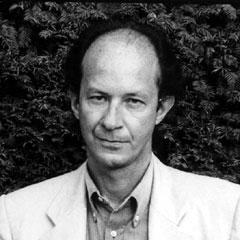
Giorgio Agamben
Giorgio Agamben

Giorgio Agamben is an Italian philosopher born on April 22, 1942. His research spans various fields including language, politics, aesthetics, and ethics, particularly known for his analyses of language, power, and the state of human existence. more

You May Also Like

“Noble Dash has a kind master, who values his faithful dog, and who would not part with him for a pile of silver and gold, He never forgets the day when his fair-haired little Mary was washed by a big wave into the sea as’ she ran towards her ball, which Tom had thrown into the tide. Dash at the time was lying as if asleep on a heap of sea-weed a short distance off. At the cry of Mary's nurse he bounded away, and in a moment was battling in the midst of the waves. He soon had little Mary's dress held fast in the grip of his strong teeth, and swam bravely with her ashore. Good dog! who could repay him for such a noble deed? Mary's father and mother patted and praised him, and nurse and the children cried over him and hugged him, all dripping as he was from the salt sea; and that night, when little Mary was: warmly asleep in her bed, and the household met together at the hour of evening prayer, no one was surprised that Mary s father thanked God that he had made so noble a dumb creature as faithful Dash, who had saved the life of his darling child.”

“Save it, pup,” cried Dick, pointing to the child, which had been caught in an eddy, and was for a few moments hovering on the edge of the stream that rushed impetuously towards the fall. The noble Newfoundland did not require to be told what to do. It seems a natural instinct in this sagacious species of dog to save man or beast that chances to be struggling in the water, and many are the authentic stories related of Newfoundland dogs saving life in eases of shipwreck. Indeed, they are regularly trained to the work in some countries; and nobly, fearlessly, disinterestedly do they discharge their trust, often in the midst of appalling dangers. Crusoe sprang from the bank with such impetus that his broad chest ploughed up the water like the bow of a boat, and the energetic workings of his muscles were indicated by the force of each successive propulsion as he shot ahead. In a few seconds he reached the child and caught it by the hair. Then he turned to swim back, but the stream had got hold of him. Bravely he struggled, and lifted the child breast-high out of the water in his powerful efforts to stem the current. In vain. Each moment he was carried inch by inch down until he was on the brink of the fall, which, though not high, was a large body of water and fell with a heavy roar. He raised himself high out of the stream with the vigour of his last struggle, and then fell back into the abyss.”