Quotessence
Home / Quotes / Quote by Francesco Guicciardini

Quote by Francesco Guicciardini

“Ferdinando [King of Naples] resolv’d, in good Earnest, to try how to compromise the Affair of the Castles; being persuaded, that that when this Obstacle was remov'd, Matters would easily return into the fame peaceable Channel. But by removing the Causes, the Effects that sprung from them are not always remov'd. For, as it frequently happens, that Resolutions taken out of Fear seldom appear sufficient to the Fearful.”

Quote by Francesco Guicciardini

Work

The History of Italy

Browse quotes and source details for this work. more

Author

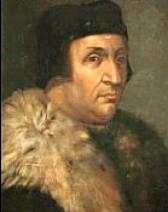
Francesco Guicciardini

Francesco Guicciardini was an Italian historian renowned for his profound insights into Italian history and diplomatic policy. His work, 'The History of Italy', is one of the most important historical works of the Renaissance. more

You May Also Like

“The art academies had offered a story of art as the conquest, loss, and finally reconquest of nature through the mastery of illusionistic technology, improved by a grasp of ideal beauty. Romanticism replaced this with the story of art as an acquisition and then loss of wisdom, warning us not to mistake naturalism or technical skill for such wisdom. Historicism proposed that each period expresses its view of the world through its own forms; no art form can be preferred for they are all true registrations of the evolving mind. Materialism, finally, a version of historicism, told the story of art as a series of local responses to conditions, materials, tools, and functions. The immediate purpose of Riegl's teleology was to counter the crass reductionism of the materialist version. He did this by insinuating that there was something animating the history of form, a ghost in the machine, a will to form that overrode pragmatic needs. There is a tension in Riegl's art history between the anthropomorphic concept of Kunstwollen, which locates the motor of history in the individual, and the teleological shape of history, the inexorable dematerialization and intellectualization of art, a schema inherited from Hegel and never justified philosophically by Riegl. For Riegl, all art is naturalistic; it is simply that each epoch sees nature differently. What they see is the true object of art. This transforms art history into a history of seeing, and therefore of thinking.”