Quotessence
Home / Quotes / Quote by David Quammen

Quote by David Quammen

“There’s a voice that says: "So what?" It’s not my voice, it’s probably not yours, but it makes itself heard in the arenas of public opinion, querulous and smug and fortified by just a little knowledge, which as always is a dangerous thing. "So what if a bunch of species go extinct?" It says. "Extinction is a natural process. Darwin himself said so, didn’t he? Extinction is the complement of evolution, making room for new species to evolve. There have always been extinctions. So why worry about these extinctions currently being caused by humanity?" And there has always been a pilot light burning in your furnace. So why worry when your house is on fire?”

Quote by David Quammen

Work

The Song of the Dodo: Island Biogeography in an Age of Extinction

Browse quotes and source details for this work. more

Author
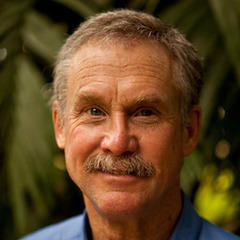
David Quammen
David Quammen

David Quammen is an American writer known for his in-depth exploration of natural history. His works often involve biology, ecology, and the relationship between humans and nature. Born on February 24, 1948, Quammen's writing career spans multiple genres, including scientific writing, travel literature, and journalism. more

You May Also Like

“The burden therefore rests with the American legal community and with the American human-rights lobbies and non-governmental organizations. They can either persist in averting their gaze from the egregious impunity enjoyed by a notorious war criminal and lawbreaker, or they can become seized by the exalted standards to which they continually hold everyone else. The current state of suspended animation, however, cannot last. If the courts and lawyers of this country will not do their duty, we shall watch as the victims and survivors of this man pursue justice and vindication in their own dignified and painstaking way, and at their own expense, and we shall be put to shame.”

“[In response to atrocities against Armenians] the British government issued a joint memo with France and Russia on 24 May 1915. The first draft, proposed by Russia, contained the phrase "crimes against Christianity and civilization," but France and Britain feared this would offend their own colonial Muslim populations and succeeded in changing the phrase to "crimes against humanity." This paved the way for the concept to assume its place after the war as one of the most important categories in international law.”

“Before the First World War, in many places military officers who had not taken part directly in operations became liable one way or another under the jurisprudence and military law of their own countries. But the question of prosecuting the political authorities--the people who ran the country--had not yet been considered. Calls during the war to hold the Ottoman political elite and the German kaiser personally responsible for the Armenian massacres and to prosecute them on those grounds heralded a turning point. From that point on, personal responsibility and prosecution--even of those in the political sphere--became one of the most important principles of international law.”

“...And unpredictability can spread: one powerful outlier can pave the way for others, and as more states joint the outlier, the foundations of the rule of law begin to crumble. US counterterrorism practices--and the legal theories that under-pin them--are undermining the international rule of law in precisely this way...”

“Bluntly: the United States will need to accept some further loss of sovereignty in exchange for more just and effective mechanisms for solving collective global problems. No state can combat disease, climate change, or international terrorist organizations on its own--but any state can play a destructive and destabilizing role on its own.”