“Hilly Brown was trying to cope with the idea that, for the first time in his life, he had failed at something he really wanted to do. He had been pleased with the applause and congratulations, and he was not so self-deprecating as to mistake honest praise for politeness. But there was a stony part of him—the part which, under other circumstances, might have made him a great artist—which was not satisfied with honest praise. Honest praise, this stony part insisted, was what the bundlers of the world heaped on the heads of the barely competent. In short, honest praise was not enough… “What do you want, Hilly!?” [his mother] would have cried, throwing up her hands. “Dis-honest praise?” Ev, who saw much, and David, who saw more, could have told her. He wanted to make their eyes get so big they looked like they were going to fall out. He wanted to make the girls scream, and the boys yell... He would have traded all the honest praise and genuine applause in the world for just one scream, one belly-laugh, one woman fainting dead away like the booklet says they did when Harry Houdini did his famous milk-can escape. Because honest praise means you only got good. When they scream and laugh and faint, that means you got great. But he suspected—no, he knew—that he was never going to get great, and all the want in the world wasn’t going to change that fact. It was a bitter blow—not the failure itself, so much as the knowing it couldn’t be changed. It was like the end of Santa Clause, in a way.”
Quote by Stephen King
Book:The Tommyknockers
Work
The Tommyknockers
Catherine Corrigan, a writer, moves to a small town in Maine, where she encounters mysterious occurrences and strange beings known as the Tommyknockers. The story explores themes of alien influence, the nature of reality, and the psychological impact of extraordinary events. more
Author
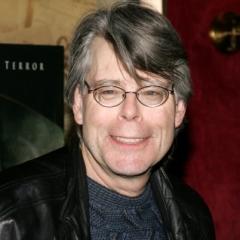
Stephen King
Stephen King, born on September 21, 1947, is a renowned American author. His works primarily focus on horror, fantasy, and science fiction, and have won him a wide audience. King has received numerous literary awards in the United States, including the Edgar Allan Poe Award and the World Fantasy Award. more
You May Also Like
Source: Awaken To Love: Reclaiming Wholeness through Embodied Nonduality with Jungian Wisdom, Psychosynthesis & Internal Family Systems
“We failed him in life. We should not fail him in death.”
Source: Patron Saints of Nothing
Source: While They're Still Here: A Memoir
“The true measure of success is how many times you can bounce back from the failure.”
Source: Act Accordingly
Source: Fascism: A Warning