Quotessence
Home / Quotes / Quote by George Eliot

Quote by George Eliot

“I suppose we faulty creatures can never feel so much for the irreproachable as for those who are bruised in the struggle with their own faults. It is a very ancient story, that of the lost sheep--but it comes up afresh every day." "That is a way of speaking--it is not acted upon, it is not real," said Gwendolen, bitterly. "You admire Miss Lapidoth because you think her blameless, perfect. And you know you would despise a woman who had done something you thought very wrong." "That would depend entirely upon her own view of what she had done," said Deronda. "You would be satisfied if she were very wretched, I suppose," said Gwendolen, impetuously. "No, not satisfied--full of sorrow for her. It was not a mere way of speaking. I did not mean to say that the finer nature is not more adorable; I meant that those who would be comparatively uninteresting beforehand may become worthier of sympathy when they do something that awakens in them a keen remorse. Lives are enlarged in different ways. I dare say some would never get their eyes opened if it were not for a violent shock from the consequences of their own actions. And when they are suffering in that way one must care for them more than, for the comfortably self-satisfied.”

Quote by George Eliot

Work

Daniel Deronda

Daniel Deronda is a complex narrative that intertwines the lives of its characters with the broader social and political context of the time. The story follows Daniel, a young man raised by a Jewish family, as he navigates his identity and relationships amidst the backdrop of the British Empire's expansion and the rise of Zionism. more

Author
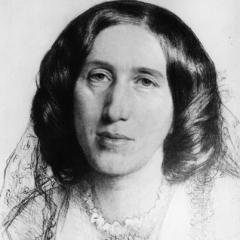
George Eliot
George Eliot

George Eliot, born Mary Ann Evans, was a renowned 19th-century British novelist. Her works are known for their profound psychological insights and critical exploration of social issues. With her unique narrative techniques and rich emotional expression, she has had a profound impact on literature. more

You May Also Like

“Why did I do that?” Remorse touches us a little deeper causing us to feel disgust and pain (involving both the intellect and the heart), but not causing us to change our ways. True repentance brings in the third aspect of our minds – our will. To truly repent one must have a change of will. “Godly sorrow” is the catalyst that brings us to true repentance. [Warren Wiersbe, Be Reverent, p. 149.] By Carey Dillinger From Expository Files 11.6; June 2004”

“Wiersbe suggests that a distinction can be made between regret, remorse and repentance. Regret is that activity of the mind (intellect) that causes us to say, “Why did I do that?” Remorse touches us a little deeper causing us to feel disgust and pain (involving both the intellect and the heart), but not causing us to change our ways. True repentance brings in the third aspect of our minds – our will. To truly repent one must have a change of will. “Godly sorrow” is the catalyst that brings us to true repentance. [Warren Wiersbe, Be Reverent, p. 149.] By Carey Dillinger From Expository Files 11.6; June 2004”

“Today is a trumpet to set the hounds baying. The past is a fox the hunters are flaying. Nothing unspoken goes without saying. Love's a casino where lovers risk playing. The future's a marker our hearts are prepaying. The future's a promise there's no guaranteeing. Today is a fire the field mice are fleeing. Love is a marriage of feeling and being. The past is a mirror for wishful sightseeing. Nothing goes missing without absenteeing. Nothing gets cloven except by dividing. The future is chosen by atoms colliding. The past's an elision forever eliding. Today is a fog bank in which I am hiding. Love is a burn forever debriding. Love's an ascent forever plateauing. Nothing is granted except by bestowing. Today is an anthem the cuckoos are crowing. The future's a convolute river onflowing. The past is a lawn the neighbor is mowing. The past is an answer not worth pursuing, Nothing gets done except by the doing. The future's a climax forever ensuing. Love is only won by wooing. Today is a truce between reaping and rueing.”

“Mothers might be characterized as “uncaring” when they resume paid work “too soon” after birth, or as “giving up on themselves” when they return to work “too late” or never; when they do not breastfeed as well as when they do so for “too long” or “too publicly”; when they turn to homeschooling their children, or when mothers—single parents or not—must work long hours outside the home and are therefore accused of neglect. In addition, single mothers, mothers receiving welfare, immigrant mothers, and lesbian mothers—circumstances and identities that also often overlap—tend to be looked at even more critically.”