Quotessence
Home / Quotes / Quote by Charles Dickens

Quote by Charles Dickens

“He went to the church, and walked about the streets, and watched the people hurrying to and for, and patted the children on the head, and questioned beggars, and looked down into the kitchens of homes, and up to the windows, and found that everything could yield him pleasure. He had never dreamed of any walk, that anything, could give him so much happiness. (p. 119)”

Quote by Charles Dickens

Work

A Christmas Carol

Charles Dickens' 'A Christmas Carol' is a novella that explores themes of greed, charity, and the spirit of giving. The story follows Ebenezer Scrooge, a miserly and cold-hearted businessman, who is visited by the ghost of his deceased business partner, Jacob Marley, and three spirits: the Ghost of Christmas Past, the Ghost of Christmas Present, and the Ghost of Christmas Yet to Come. Through these encounters, Scrooge is shown the errors of his ways and is ultimately transformed into a more compassionate and generous individual. more

Author

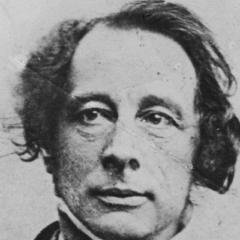
Charles Dickens
Charles Dickens

Charles Dickens, a British writer born on February 7, 1812, and died on June 9, 1870, is one of the greatest novelists of the 19th century. Known for his profound social criticism and vivid narrative style, Dickens' works extensively cover social reality, revealing various issues in the British society of the time. more

You May Also Like

“It is not possible to have sex equality for all in a society when one's sex is the one that is for sale - a commodity or service - and the other sex is the consumer, and almost always the purveyor (pimp); consumers have rights over and above the goods and services that they buy. Legalising prostitution isn't the answer either.”

“When I talk about sex differences and reporting or domestic and sexual violence, people often suggest that the differences are exaggerated because it's such a taboo for men to report. Not only does this fail to recognise that reporting abuse is also a taboo for many women, but research has found the opposite to be true: that men overestimate their victimisation and underestimate their own violence, whereas women are more likely to overestimate their own use of violence but underestimate their victimisation. Women normalise, discount, minimise, excuse their partner's domestic and sexual violence against them, and they're more likely to find ways to make it their fault.”

“Another piece of research found that when women were reported to the police for abuse, which men often to as a form of attack, they (women) were arrested to a disproportionate degree given the fewer incidents where they were perpetrators. The study found that men were arrested for one in every ten incidents, whilst women were arrested for one in every three incidents.”

“People can be incredibly resistant to considering facts that don't fit with their world view and the belief that women are as violent and abusive as men is one that too many seem to be unwilling to let go of. Sex differences in intimate partner homicide rates (homicide includes killings sentenced as both murders and manslaughters) show that so-called 'sex symmetry' is a myth.”

“[...] Criminal behaviours of those who had legally and medically transitioned from men to trans women followed the pattern of male offending and those who had transitioned from women to trans men continued with female pattern offending. Males who had transitioned were 18 times more likely to be convicted of violent crime than females.”

“[...] In the space of 50 years, we started from a place of formidable feminist collective energy and action pulling together and creating new services to support women who had been subjected to men's violence. Within a couple of generations, we have come to a place where many, if not the majority, of those working in the same organisations and supporting later generations of victim-survivors of men's violence seem to have lost their political edge. What happened to the willingness or ability to stand up for women's sex-based rights and protections, to the understanding of the patriarchal context of men's violence against women?”

“The struggles of women are not a single-issue matter. Women do not lead single-issue lives, and for the majority of women, the inequalities intersecting their lives are multiple. Neither do we need to deny the rights of others to prioritise the rights of women. We do not need to deny that males can be victims of abuse. We do not need to deny males and people with transgender identities the right to develop specialist services in order to assert the boundaries of our own. Putting women first is not hate.”