Quotessence
Home / Quotes / Quote by Muhammad Yunus

Quote by Muhammad Yunus

Work

Banker To The Poor: Micro-Lending and the Battle Against World Poverty

This book delves into the world of micro-lending, a financial practice that provides small loans to individuals in developing countries. It examines how this approach has been used to combat poverty and improve the lives of the economically disadvantaged. more

Author
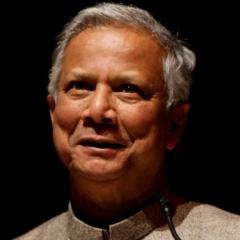
Muhammad Yunus
Muhammad Yunus

Muhammad Yunus, born on June 28, 1940, is a renowned entrepreneur, economist, and philanthropist from Bangladesh. He is best known for founding Grameen Bank, which provides microloans to the poor to help them start businesses and improve their lives. For his work, Yunus was awarded the Nobel Peace Prize in 2006. more

You May Also Like

“What we are experiencing is experiential poverty. Such poverty may not only be about a lack of experiences, where nothing is happening. An abundance of activities can also create a feeling of experiential poverty. And this last point is interesting. Things just get to be too much. the problem, according to Lars Fr. H. Svendsen, is that we carry on seeking "increasingly more powerful experiences" instead of pausing to breathe deeply, shut out the world and use the time to experience ourselves. The idea that boredom can be avoided by constantly pursuing something new, being available around the clock, sending messages and clicking further, watching something you haven't yet seen, is naive. The more you try to avoid boredom, the more bored you become. Routine is like that too... Busying oneself becomes a goal in and of itself, instead of allowing that same restlessness to lead you somewhere further.”

“You did not let me keep my name, so I will strip you of yours. In this world, you are what I say you are, and I say you are a ghost, a long night's fever dream that I have finally woken up from. I say you are the smoke-wisp memory of a flame, thawing ice under an early spring sun, a chalk ledger of debts being wiped clean. I say you do not have a name.”

“The train bore me away, through the monstrous scenery of slag-heaps, chimneys, piled scrap-iron, foul canals, paths of cindery mud criss-crossed by the prints of clogs. This was March, but the weather had been horribly cold and everywhere there were mounds of blackened snow. As we moved slowly through the outskirts of the town we passed row after row of little grey slum houses running at right angles to the embankment. At the back of one of the houses a young woman was kneeling on the stones, poking a stick up the leaden waste-pipe which ran from the sink inside and which I suppose was blocked. I had time to see everything about her—her sacking apron, her clumsy clogs, her arms reddened by the cold. She looked up as the train passed, and I was almost near enough to catch her eye. She had a round pale face, the usual exhausted face of the slum girl who is twenty-five and looks forty, thanks to miscarriages and drudgery; and it wore, for the second in which I saw it, the most desolate, hopeless expression I have ever-seen. It struck me then that we are mistaken when we say that ‘It isn’t the same for them as it would be for us,’ and that people bred in the slums can imagine nothing but the slums. For what I saw in her face was not the ignorant suffering of an animal. She knew well enough what was happening to her—understood as well as I did how dreadful a destiny it was to be kneeling there in the bitter cold, on the slimy stones of a slum backyard, poking a stick up a foul drain-pipe.”