Quotessence
Home / Quotes / Quote by Barbara Kingsolver

Quote by Barbara Kingsolver

“Your blood for mine. If not these, then those. War is the supreme mathematics problem. It strains our skulls, yet we work out the sums, believing we have pressed the most monstrous quantities into a balanced equation.”

Quote by Barbara Kingsolver

Work

The Lacuna

The story follows a character's journey through various historical periods, intertwining personal and political events. more
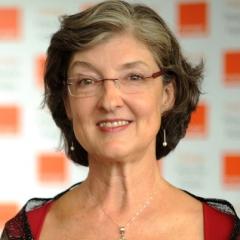
Author

Barbara Kingsolver
Barbara Kingsolver

Barbara Kingsolver is an American novelist known for her insightful social commentary and rich literary imagination. Her works often explore themes of environmental protection, social justice, and women's issues, and have gained widespread popularity. Born on April 8, 1955, in Arkansas, USA, Kingsolver grew up in Arkansas and Mexico, and later earned a BA in literature from Amherst College and an MA in comparative literature from Columbia University. more

You May Also Like

“Bella Swan: Jasper? Are you sure there's nothing I can do to help? Jasper Hale: Well just your presence alone, your scent, will distract the newborns. Their hunting instinct will take over, and drive 'em crazy. Bella Swan: Good, I'm glad. [Jasper nods and begins to walk away] Bella Swan: . Bella Swan: Hey, [Jasper turns around] Bella Swan: how do you know so much about this? Jasper Hale: I didn't have quite the same upbringing as my adopted siblings. [Rolls up sleeves and shows Bella his arms, which have bite marks on them] Jasper Hale: . Bella Swan: [Hops off Jeep] Those bites are like mine. Jasper Hale: Battle scars [smiles] Jasper Hale: . All the training the Confederate Army gave me was useless against the newborns, but still, I never lost a fight. Bella Swan: Hey, this - this happened during the Civil War? Jasper Hale: I was the youngest major in the Texas Calvary, all without having seen any real battle. Bella Swan: Until...? Jasper Hale: Till I met a certain immortal... Maria”

Author:David Slade

“She could see Albert standing at the door, hiding the bakery box behind him with his mischievous smile. When he revealed them, she had hugged him tight. The landlady had brought some expresso and the newlywed Mr. and Mrs. Jacobs had enjoyed their cheesecake tarts in front of the little fireplace with fine Italian coffee. Even so long after Albert’s death, remembering that scene still brought her comfort.”

“Across the centuries the moral systems from medival chivalry to Bruce Springsteen love anthems have worked the same basic way. They take immediate selfish interests and enmesh them within transcendent, spiritual meanings. Love becomes a holy cause, an act of self-sacrifice and selfless commitment. But texting and the utilitarian mind-set are naturally corrosive toward poetry and imagination. A coat of ironic detachment is required for anyone who hopes to withstand the brutal feedback of the marketplace. In today's world, the choice of a Prius can be a more sanctified act than the choice of an erotic partner. This does not mean that young people today are worse or shallower than young people in the past. It does mean they get less help. People once lived within a pattern of being, which educated the emotions, guided the temporary toward the permanent and linked everyday urges to higher things. The accumulated wisdom of the community steered couples as they tried to earn each other's commitment. Today there are fewer norms that guide that way. Today's technology seems to threaten the sort of recurring and stable reciprocity that is the building block of trust.”

“In 1941, as the United States faced the threat of another horrific war, President Franklin D. Roosevelt was leading the nation from a wheelchair. Struck down by polio at age thirty-nine, he rehabilitated and marshaled himself, despite severe pain, to press on with his career in politics. Eleven years later, delivering his message of confidence and optimism, he was elected President of the United States.”