Quotessence
Home / Quotes / Quote by Swami Vivekananda

Quote by Swami Vivekananda

“Animals cannot have any high thoughts; nor can the Angels or Devas attain to direct freedom without human birth.”

Quote by Swami Vivekananda

Author
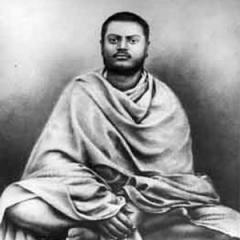
Swami Vivekananda
Swami Vivekananda

Swami Vivekananda (January 12, 1863 – July 4, 1902) was an Indian Hindu monk, philosopher, and social reformer. Born as Narendranath Datta in Kolkata, he was a chief disciple of the mystic Ramakrishna. He is best known for his historic speech at the 1893 Parliament of the World's Religions in Chicago, where he introduced Hinduism to the Western world. He founded the Ramakrishna Mission in 1897, focusing on social service, education, and interfaith harmony. His teachings emphasized self-realization, service to humanity, and the unity of all religions. He wrote extensively on yoga and Vedanta philosophy, influencing global spirituality and Indian nationalism. He died at the age of 39, leaving a lasting legacy as a bridge between Eastern and Western thought. more

You May Also Like

“Русти хмыкнул, но тут же насупился. – Шани! Немедленно ко мне! Запомни, девчонка, – проговорил он сквозь стиснутые зубы, наклонившись над разрубленной ногой. – Хирург может позволить себе быть циничным только после десяти лет практики. Запомнила?”

“No! It was not me. I did not touch him!" "But you know who did. You were there," Shanti whispered, her face cracking, revealing visions of death. Of loss. Of misery so intense it sucked all the happy thoughts from the room and corroded their memories. Sanders took a step forward even as the Captain did, not knowing exactly what to do, but wanting to cure this woman of that pain. The sight of it broke his heart. No one deserved to see a loved on killed, and then get confronted with it like this. No one.”

“With good reason, love's messengers, Eros and Kama, are armed with bows and long-distance arrows. No being, god or mortal, can choose love. Love comes despite ourselves; and then, if we have not already done so, we have the task of becoming our selves so we may welcome love.”

“A person acquainted with the true principles of this science, who preserves his Dharma (virtue or religious merit), his Artha (worldly wealth) and his Kama (pleasure or sensual gratification), and who has regard to the customs of the people, is sure to obtain the mastery over his senses. In short, an intelligent and knowing person attending to Dharma and Artha and also to Kama, without becoming the slave of his passions, will obtain success in everything that he may do.”

“And he is not at an age right for renunciation; he has not even entered the stage of the householder, as befits a well educated man; he has not therefore paid back his dues to the gods and to his ancestral spirits and to his fellowmen. Bound by these dues where can he go now? He has no experience at all of women and consequently of samsara. He has not therefore attained any of the purusharthas of life, namely dharma, artha and kama. He has not even rendered personal service to his parents to ensure their comfort. He has not helped his loving relations, nor endowed his dear friends with wealth, nor honoured the wise. He has not shared his wealth with his dependants nor fulfilled the desires of those begging for favours. "He has not founded his lineage by begetting sons and grandsons. Nor has he performed any great sacrificial rituals. He has not given generous gifts nor fulfilled his obligations of hospitality. He has not done his duty by this world. He has not adorned the earth with dams, wells and water distributing centres, with palaces, ponds and groves. Above all he has not still spread his fame far and wide which alone would live on till the end of the world.”